Nail Shape Guide: How to Choose the Right Shape (2026)

Most nail shape guides hand you a list of nine and leave you to work out the rest. The list is the easy part. The useful question is which one belongs on your hands.
The short answer: if you want one shape that suits almost every hand, ask for squoval. It also chips least, because it has no corners. Everything below is for working out when that is not the right answer for you.
Table of Contents
Start With Your Hands, Not the Shape
Four things decide which shape works on you. None of them is your favourite colour.
1. Your finger length and shape
Hold your hand out flat and look from above. Short or broad fingers gain length from anything that tapers. Long, slim fingers do not need the help, which is why square and squoval sit so easily on them.
2. Your nail bed width
The nail bed is the pink part, not the whole nail. Is it wider than it is long, or narrower? A wide bed suits a wide flat tip. A narrow bed already tapers, which is why almond looks grown on a narrow bed and slightly pinched on a broad one.
3. How strong your nails actually are
Be honest here, because this is the one people skip. Press a nail gently sideways. If it flexes easily, or you peel and split at the tips, a tapered shape removes exactly the side material holding them together. Thick, rigid nails have plate to spare.
4. What your hands do all day
A shape that survives a desk job does not survive a garden. Typing, washing up, gloves, long hair: each finds a corner or a length and levers against it.
| What you’re working with | Shapes that suit it | Why |
|---|---|---|
| Short fingers or small nail beds | Oval, almond, round | A tapered tip draws the eye along the finger instead of across it. |
| Wide nail beds | Square, squoval | A flat, wide tip matches the width you already have, so the nail reads as balanced rather than pinched in. |
| Narrow nail beds | Almond, oval | A tapered tip follows the line your nail already takes, so the shape looks grown rather than filed on. |
| Thin or bendy nails | Round or squoval, kept short | Less free edge past the fingertip means less leverage, and leverage is what snaps a thin nail. |
| Strong, thick nails | Almond, coffin | Tapered shapes need enough nail plate to file away without thinning what is left. Even here, stiletto asks more than most nails give. |
| Hands in water, gloves or a keyboard all day | Round, squoval | No corners to catch on fabric, and nothing long enough to lift when you push it against something. |
Putting the four together
They are not equal. Two rule shapes out, one picks, one breaks the tie.
- What your hands do removes shapes. It never adds one.
- Nail strength removes more. A thin nail rules out everything tapered and long.
- Nail bed width chooses from whatever survived the first two.
- Finger length settles it if you are still between two.
Run them in that order and you usually finish with two shapes rather than one. That is the right outcome. Pick either.
When two of them disagree
Short fingers, but wide nail beds. Your fingers want a taper and your beds want width. Squoval kept slightly longer than feels natural is the compromise: the flat tip respects the bed, the extra length does the lengthening.
Thin nails, but you want almond. Almond takes side material from a nail that has none to give. Go oval instead and keep it short. You get most of the taper without filing into the strongest part of the nail.
Strong nails, but hands-on work. Your nails can take a long tapered shape and your week cannot. Round or squoval, kept short, is not a downgrade. It is the shape that will still be intact on Friday.
The Nine Nail Shapes
1. Round
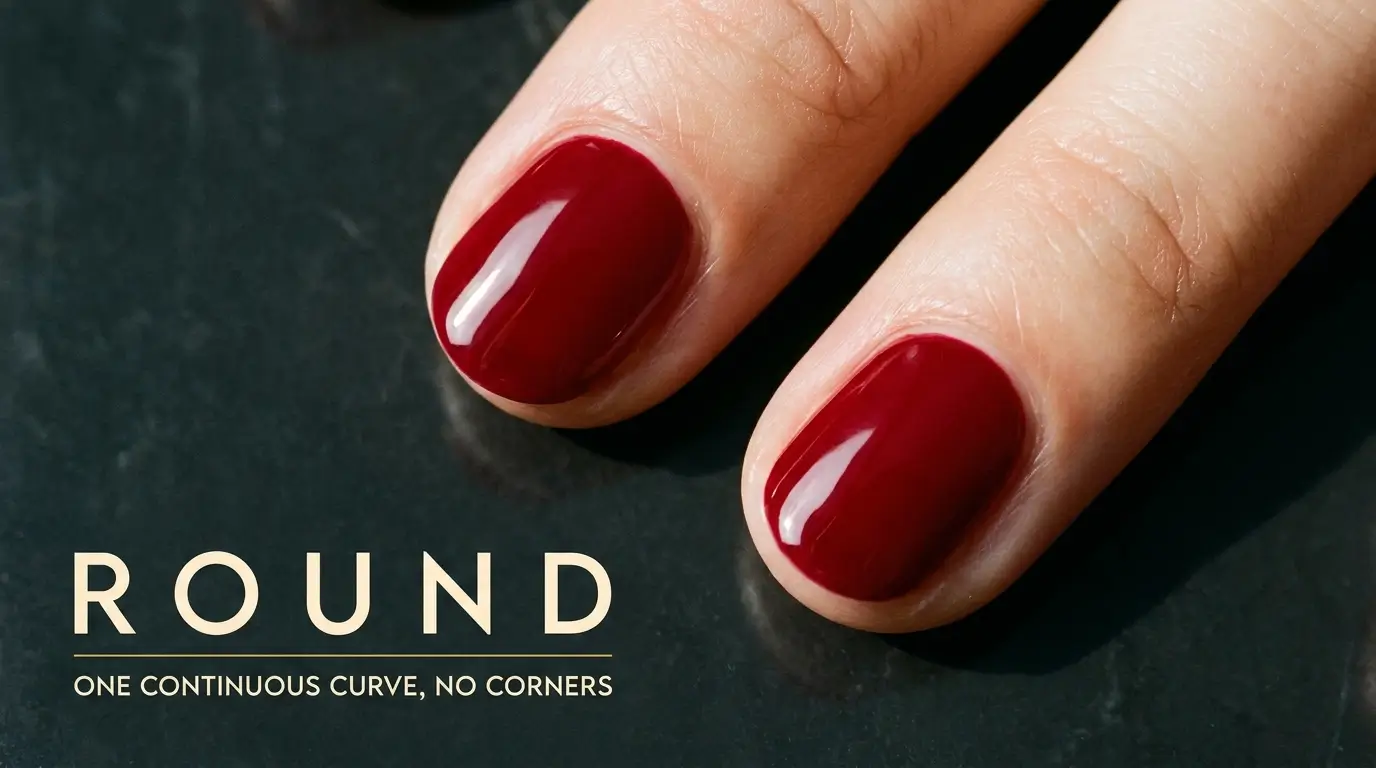
The shape your nail already wants to be: filed just past the fingertip and left curved. Technicians default to it on short or thin nails because there is no corner to catch. At any real length, though, it stops reading as a choice and starts reading as neglect.
2. Square
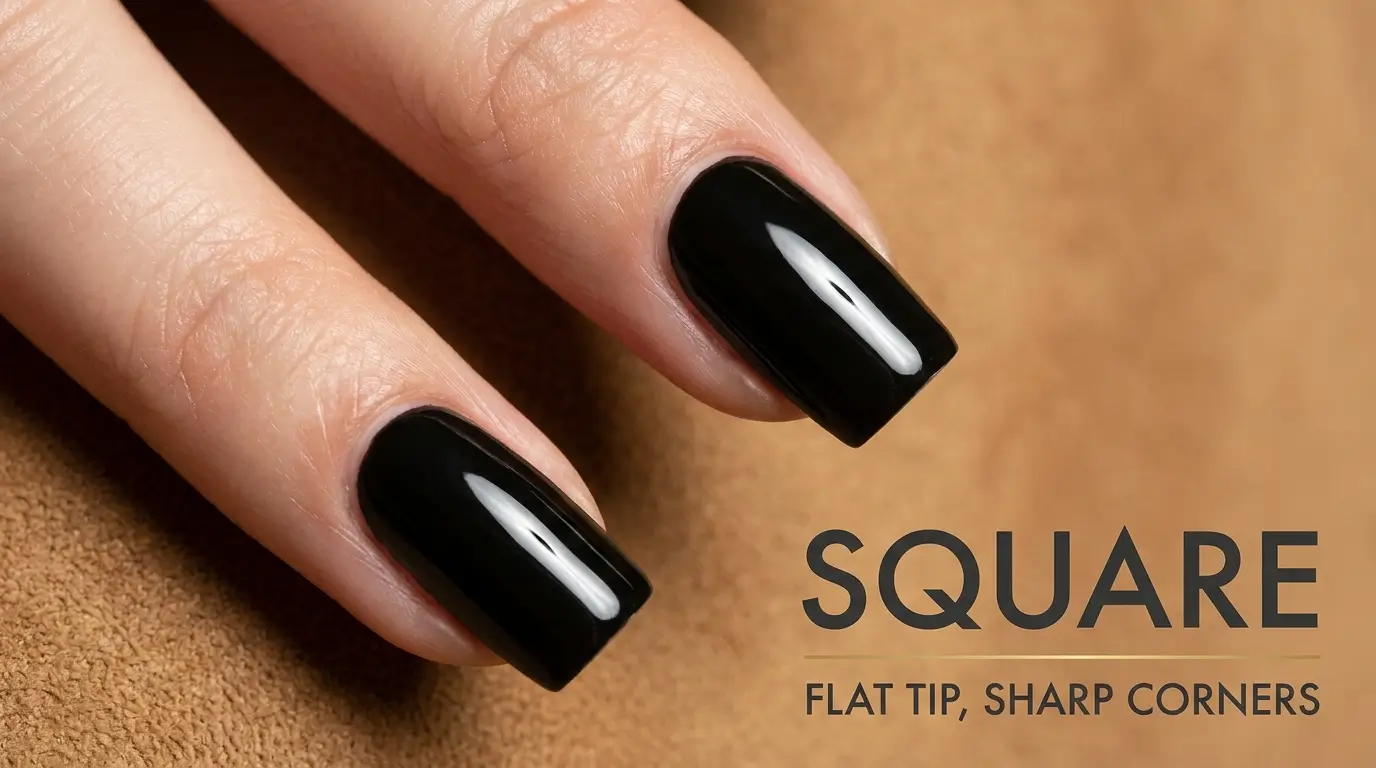
Straight sides, flat tip, corners left sharp. It makes a flat opaque colour look expensive: a true red, a black, a deep cherry red. Those corners are also the first thing to go, and if you wear square and keep losing one nail a fortnight, that is why.
3. Squoval
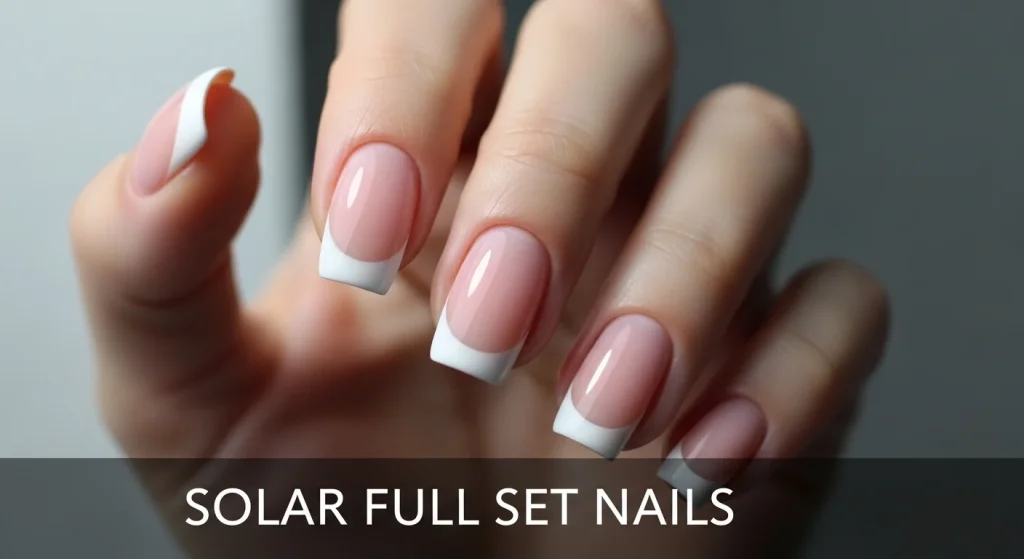
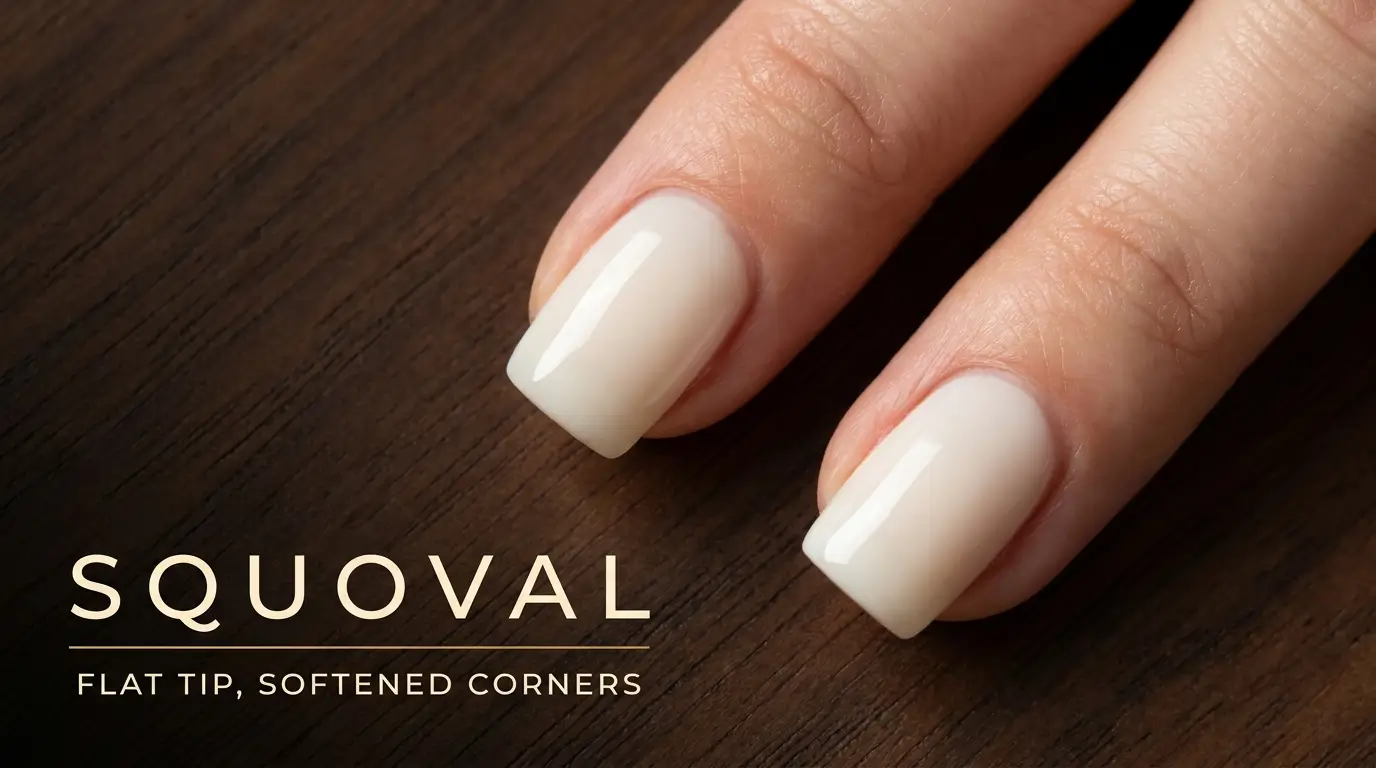
Square with the corners taken off, and the shape most technicians steer you towards if you let them. It flatters nearly every nail bed, forgives an uneven file and works at any length. Its only fault is that nobody has ever noticed it.
4. Oval
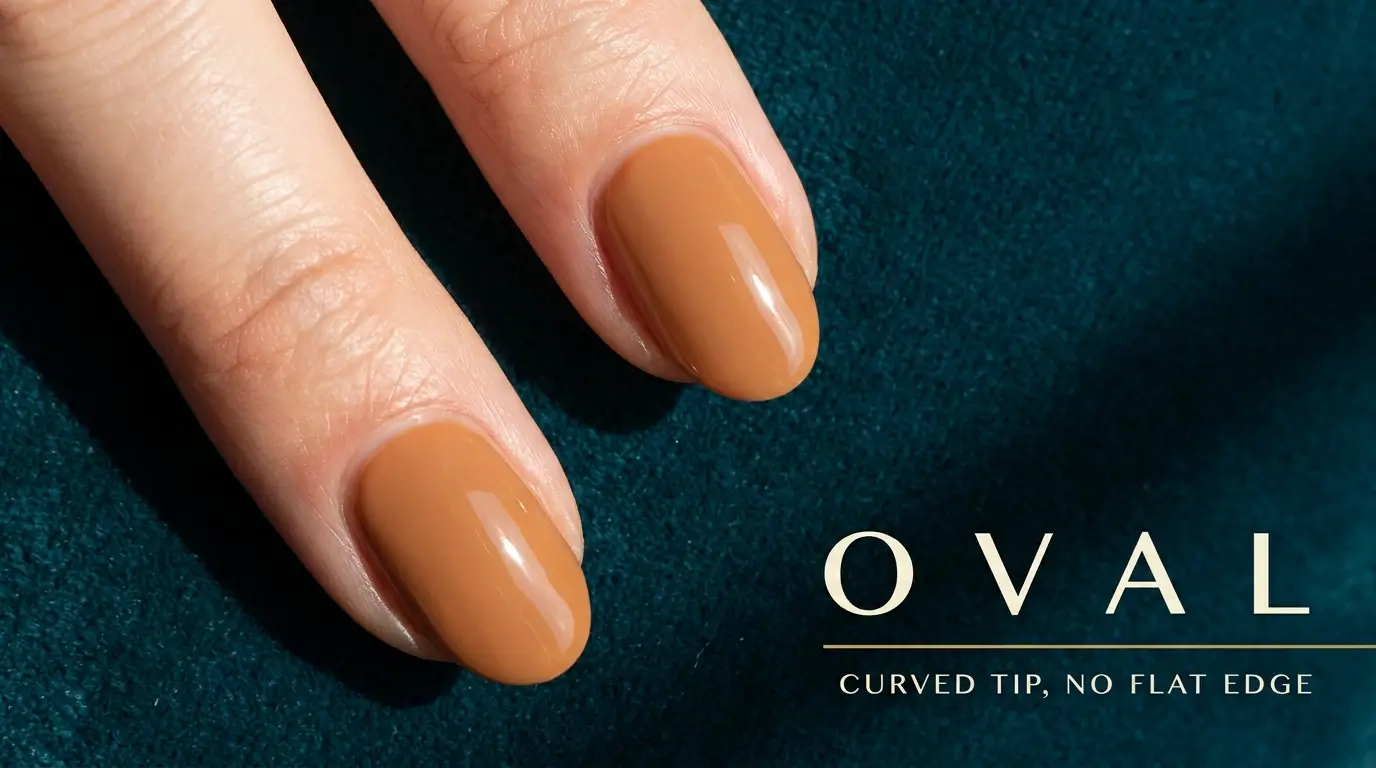
Sides filed straight, then curved into a dome. It softens a broad finger and grows out without the line a square nail leaves. One caveat: oval needs growth past the fingertip before it reads as a shape, so it is a poor choice the week after a break.
5. Almond
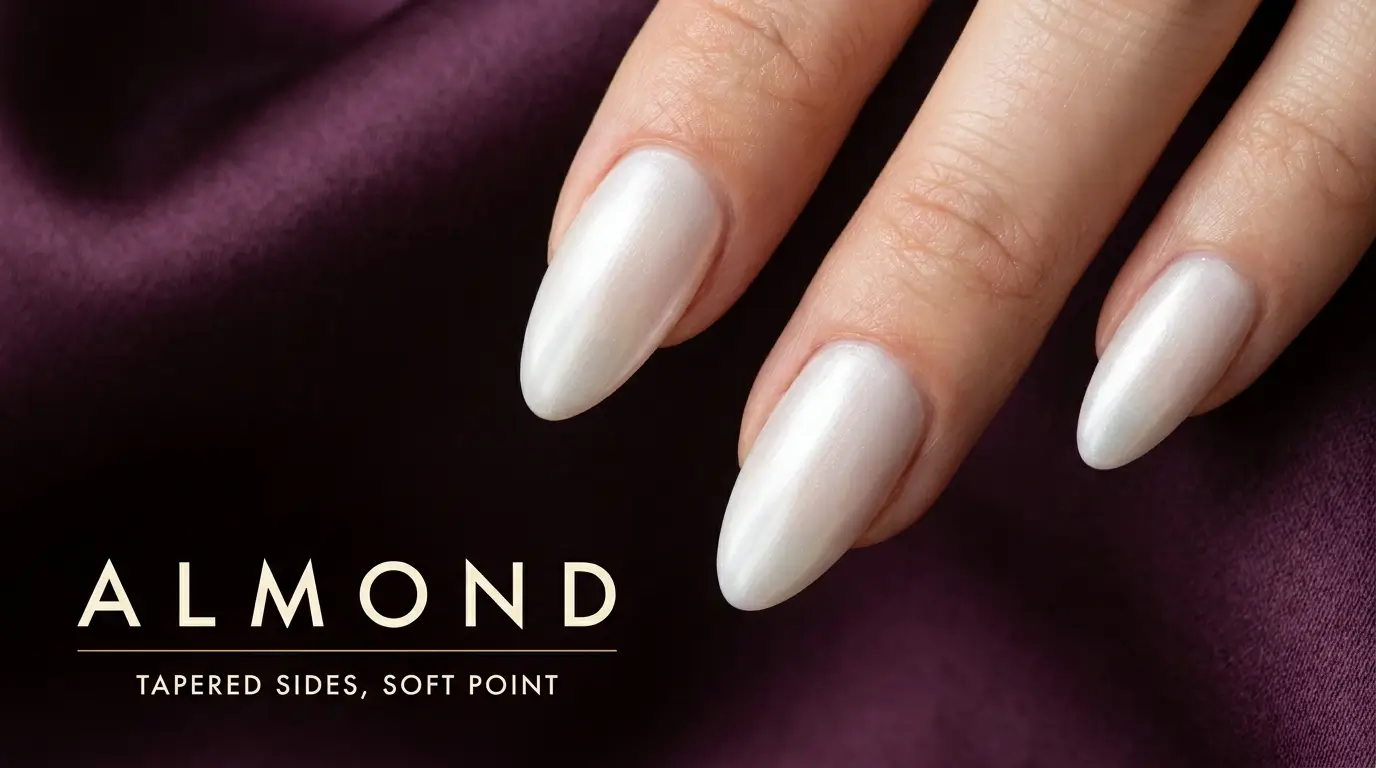
The shape people bring to the salon on their phone. Tapered sides rising to a soft point centred on the nail, and on a narrow bed it looks less like a shape you asked for than the line your nail was already drawing.
It carries chrome, glazed finishes and fine line art better than anything else here. It is also the least forgiving: the point has to sit dead centre on every finger, and the one that does not will show in every photo you take.
6. Coffin (ballerina)
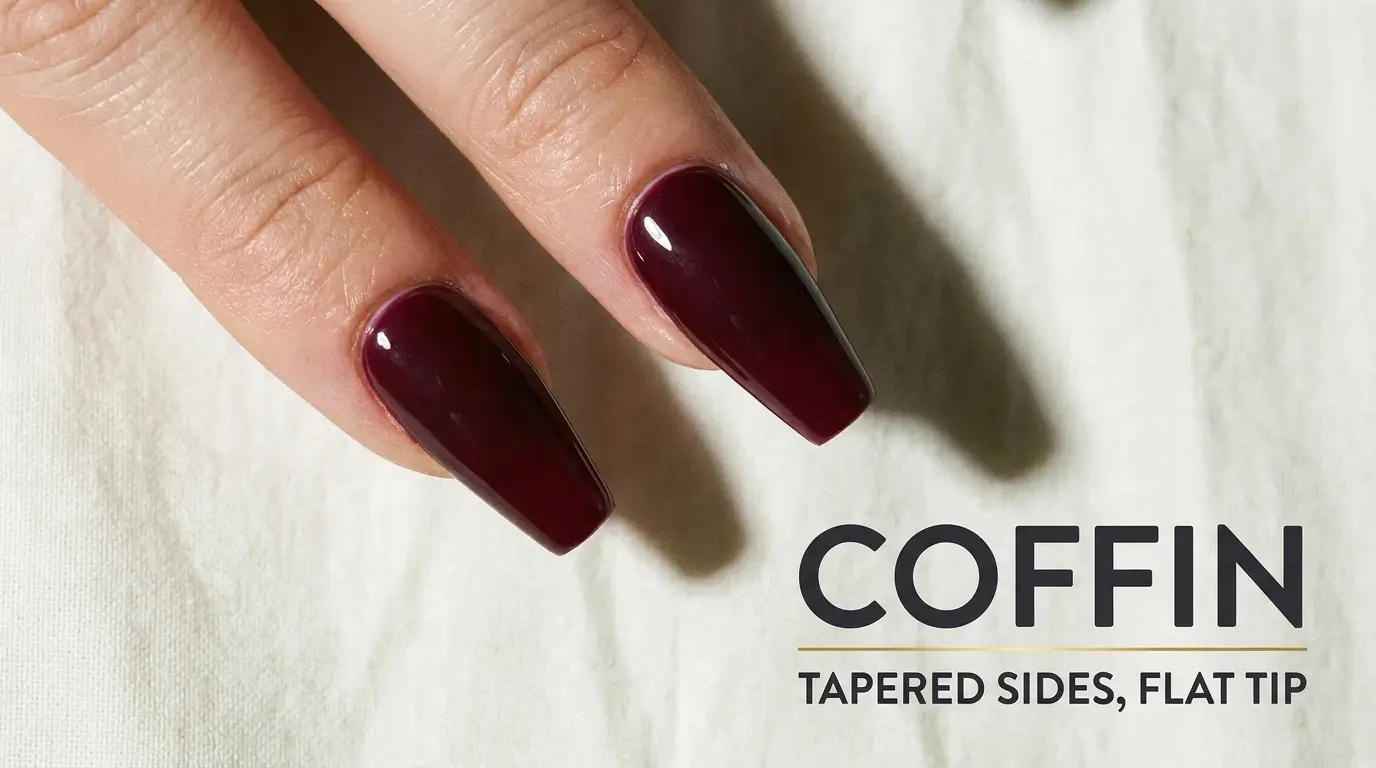
Tapered like an almond, then cut flat across the tip, which gives nail art a canvas instead of a curve. Matte finishes and French tips both live well on it. The catch is length: most natural nails have too little free edge to taper and keep a flat tip, so this usually means extensions.
7. Stiletto
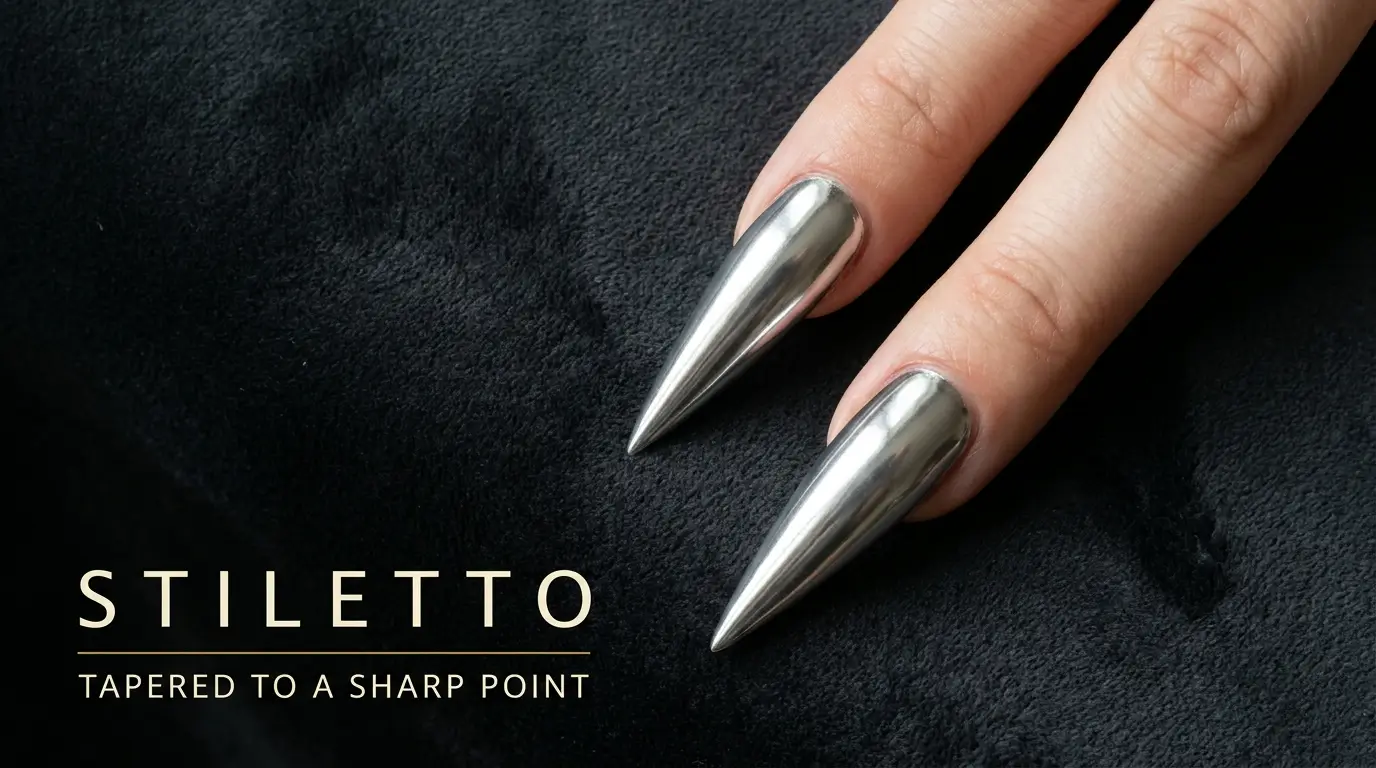
Filed to a fine point, and the most photographed shape in nails. Chrome, glitter and ombré all read dramatically across that tapered surface. Technicians are blunt about the cost: high maintenance, prone to breakage, and impossible to rescue by filing down. Shortening a stiletto gives you a blunt mistake, not a shorter stiletto.
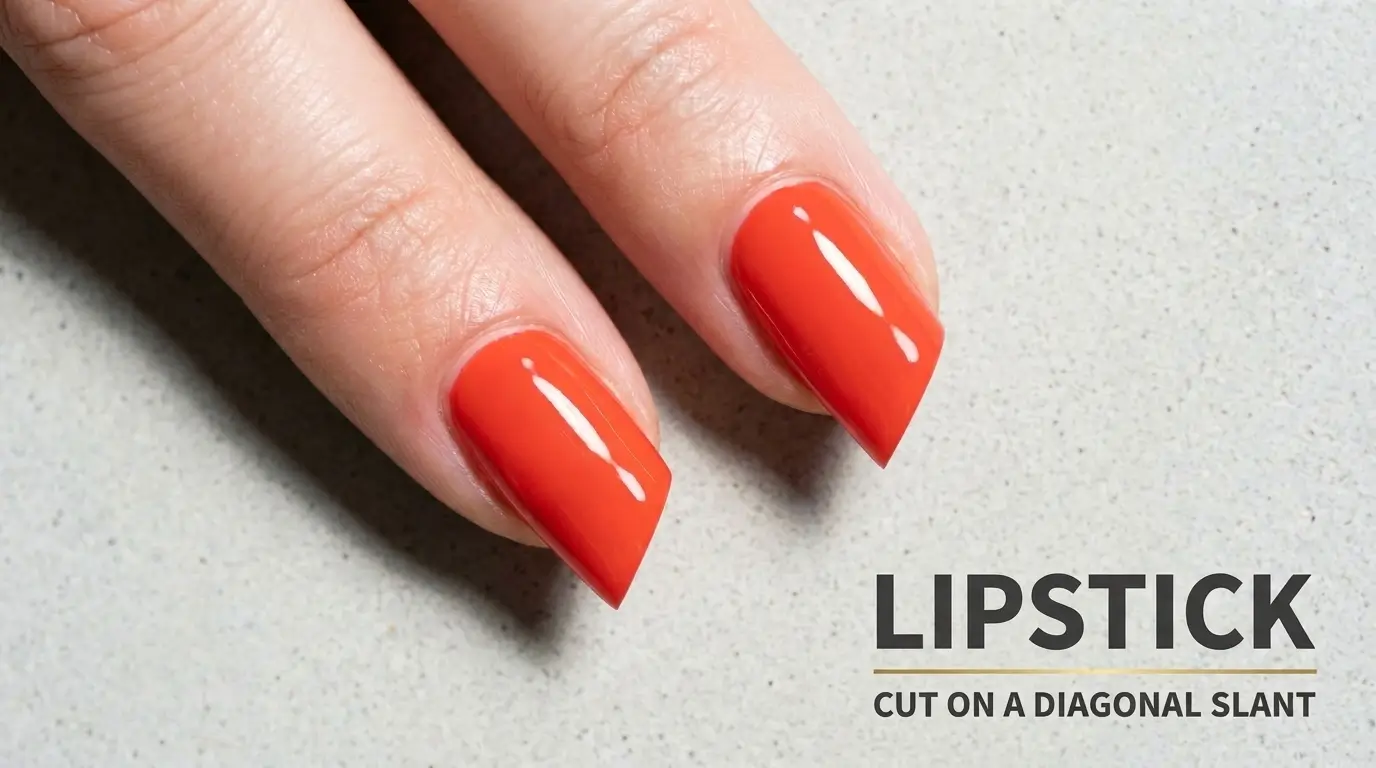
8. Lipstick
Cut on a slant across the tip like a new lipstick bullet, and worn by almost nobody, which is rather the point. It wants a single flat colour, because pattern fights the angle. The slant must run the same way on every finger, or it reads as a filing accident.
9. Edge and flare
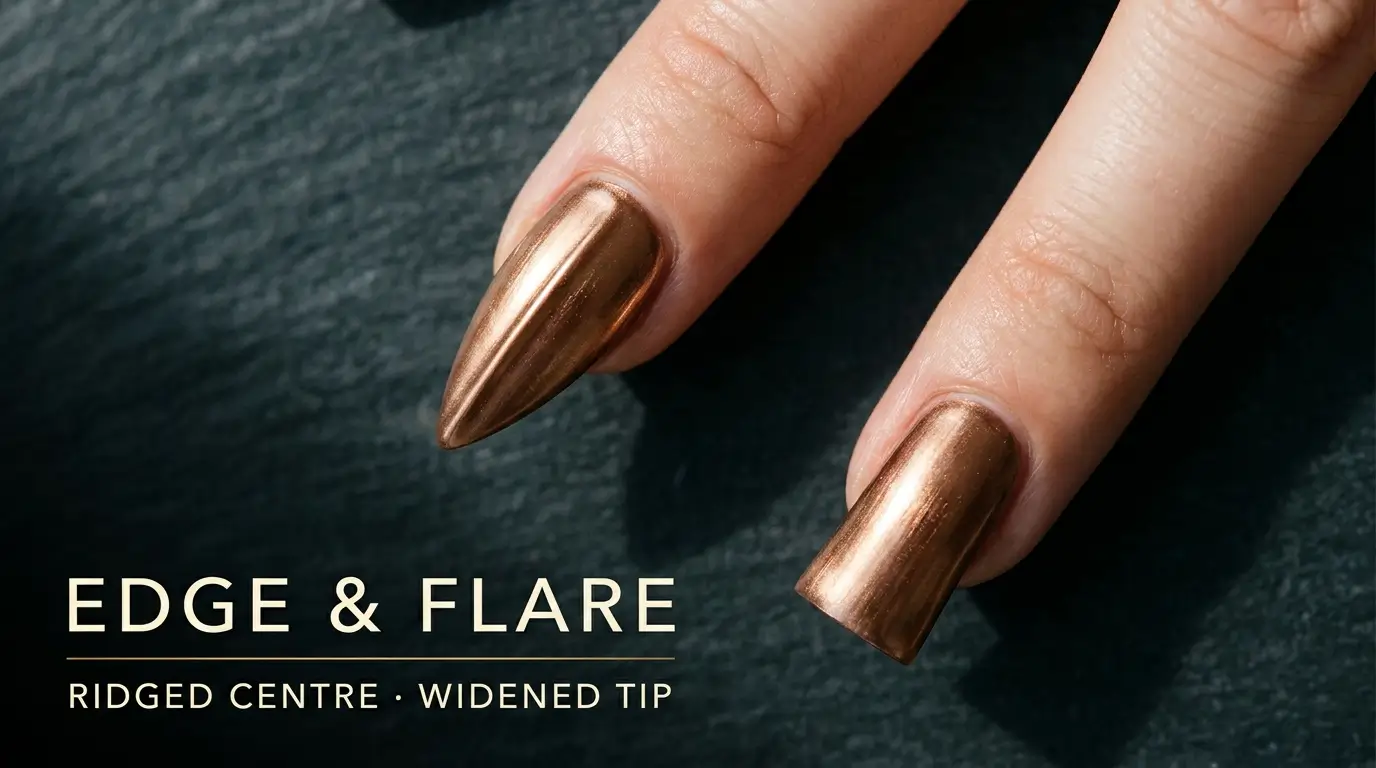
Two niche shapes worth knowing by name. Edge rises to a ridge down the centre of the nail, catching light like a crease. Flare widens outwards towards the tip instead of tapering in. Both need enhancements and neither is built for an ordinary week.
Which Nail Shape Is Strongest?
Squoval. It keeps the wide flat tip of a square nail and loses the corners, and corners are where chips start.
Technicians say the same when they build enhancements: square and squoval are the structurally sound shapes, and squoval wins because sharp corners crack. On a natural nail that same corner is what catches on a sweater cuff.
Round sits just behind on short nails, for the same reason. Stiletto sits at the far end, and nothing about how you file it changes that.
Keeping Your Shape Between Manicures
A shape holds better with small weekly tidying than with one big reshape a month. Work in one direction with a fine file and smooth any edge the moment it catches, not after it tears. File choice, grit and the motion itself are in our beginner’s guide to filing and shaping nails safely. If your file is the cheap cardboard kind, that is the first thing to change — our guide to nail tools covers what to use instead.
What to Ask For at the Salon
Say the shape and the length together. “Short squoval” or “medium almond” tells a technician far more than the shape alone, because length decides whether it survives your week.
Still undecided? Ask for squoval and go one shape more tapered next time. It is the shape that survives being the wrong choice.
If you know the shape you want but not how to get there from what is on your hands today, that is the next piece: how to file each nail shape, and how to change from one to another.
Frequently Asked Questions
How do you know what nail shape suits you?
Check four things in order: what your hands do all day, how much your nails flex, your nail bed width, then finger length. The first two rule shapes out, the third picks, the fourth breaks a tie.
What shape looks best on short nails?
Round or squoval. Both work with almost no free edge and neither needs length to look intentional. Tapered shapes need something past the fingertip to taper, so they read as unfinished when nails are very short.
Can I change my nail shape whenever I want?
You can always go narrower. Going wider is the problem: you cannot add nail back, so moving from a tapered shape to a flat one means losing length until the tip is wide again. Our guide to changing from one shape to another covers which routes cost you length.
Does nail shape affect how long a manicure lasts?
Yes, but not through the polish. Most manicures end at a chipped corner or a caught tip rather than from colour wearing down, so a shape with no corners gives those failures less to work with.