Gel-X vs Acrylic Nails Comparison: Which Is Better? (2026)

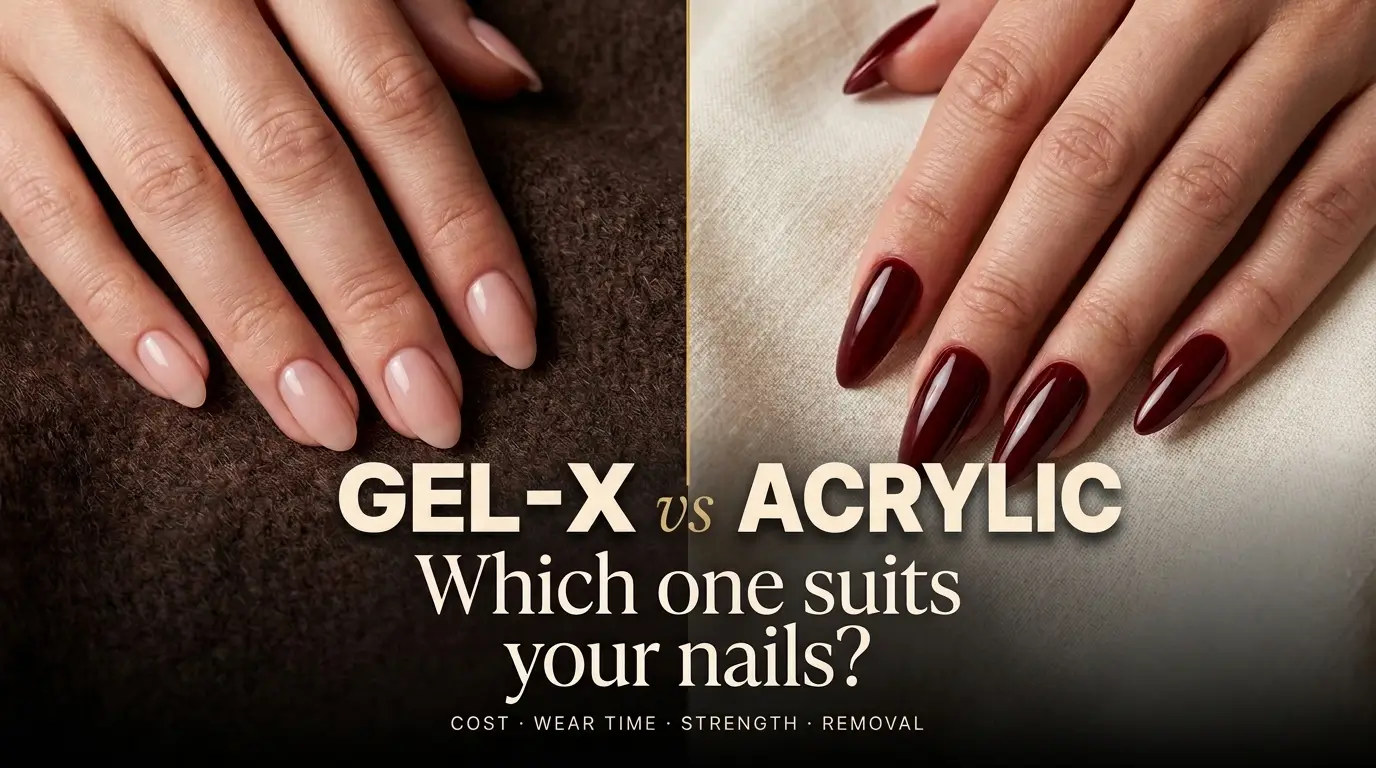
Gel-X and acrylic both give you length. They get there in completely different ways, and the honest answer to which one is better depends less on the products than on the nails underneath them.
This compares the two on wear time, cost, strength, removal and nail health — and starts with the two questions people actually ask first.
The Quick Answer
Choose Gel-X if you want lightweight extensions that stay close to a natural look, and you don’t mind having the set replaced rather than endlessly filled.
Choose acrylic if you want maximum strength, dramatic length, or a set you can keep filling for months without starting over.
The deciding factor is usually your nails, not the product. Flat nail beds struggle to hold pre-formed tips. Thin, flexible natural nails pop rigid acrylic straight off. Both patterns come up again and again from working technicians.
And whichever you choose, prep matters more than material. That is the single most repeated point among techs, and it is worth more than any feature comparison.
What this guide covers
- Gel-X vs Acrylic at a Glance
- What’s Actually Different Between Them?
- Does Gel-X Actually Add Length?
- Which Lasts Longer?
- Can Gel-X Be Filled Like Acrylic?
- Is Gel-X More Expensive Than Acrylic?
- Is Gel-X or Acrylic Stronger?
- Which Is Better for Your Nail Shape?
- Is Gel-X Healthier Than Acrylic?
- Removal: Which Is Easier to Take Off?
- Gel-X vs Acrylic vs Hard Gel vs Gel Polish
- Which Should You Choose?
- Frequently Asked Questions
Gel-X vs Acrylic at a Glance
| Gel-X | Acrylic | |
|---|---|---|
| What it is | Pre-shaped soft gel tip | Liquid monomer and powder, sculpted by hand |
| Covers | The entire nail | The free edge only |
| Feel | Lightweight, some flex | Rigid |
| Best length | Short to medium | Any, including extreme |
| Fills | One or two, then the shape degrades | Indefinitely |
| Odour during the service | Low | Strong monomer smell |
| First fill | 2–3 weeks | 2–3 weeks |
| Before the set is replaced | 3–6 weeks | Can be filled on indefinitely |
| Removal | Soaks off | Soaks off |
Two numbers, not one — and mixing them up is why every guide seems to give a different answer. More on that below.
What’s Actually Different Between Them?
One nail technician put the difference more clearly than most guides manage: “Gel x puts the extension over the entire nail. Acrylics is just the tip.” That single distinction explains almost everything else on this page.
What Gel-X is
A pre-shaped soft gel tip that covers the whole nail plate, bonded with gel and cured under a lamp. There’s no sculpting — the shape is already in the tip, so the tech’s job is sizing, prep and finish. If you want the full breakdown, we cover what Gel-X nails are separately.
What acrylic is
Liquid monomer mixed with powder polymer, sculpted by hand onto a tip or a form and hardened in the air. The extension is built outward from your free edge, which is why the shape can be almost anything. More detail in our guide to a full set of acrylic nails.
Does Gel-X Actually Add Length?
Yes, properly. A Gel-X tip extends past your natural free edge, so you walk out with longer nails than you walked in with. Two versions of this question come up constantly, and they have different answers.
Is it just gel polish?
No. Gel polish is colour cured onto your natural nail and adds no length at all. Gel-X is an extension — a tip that goes past your free edge and makes the nail longer. The word “gel” appears in both, which is where the confusion starts.
Is it just a press-on with gel on top?
It’s a fair question, and wearers ask it often. The tip does look like a press-on in the box. The difference is what holds it on: a press-on uses adhesive or tabs and comes off in days, while a Gel-X tip is bonded with gel, cured under a lamp and stays on for weeks. Same shape, completely different attachment.
Which Lasts Longer?
Ask three sources and you’ll get three answers — two weeks, three, six. They’re not contradicting each other. They’re answering two different questions.
Your first fill comes at around two to three weeks, for either system. That’s not the set failing — it’s your own nail growing out and leaving a gap at the cuticle.
The set itself holds three to six weeks before it has to come off and be redone. That’s where the two systems part company: acrylic can be filled on past that point more or less forever, while Gel-X gets one or two fills before it’s better to start again.
Gel-X holding four to five weeks with no lifting is a common account. So is acrylic never making it past two weeks on naturally flexible nails, where the rigid product and the bending nail underneath fight each other until something gives.
If a set of either has never lasted for you, that is information about your nails, not about the system.
Can Gel-X Be Filled Like Acrylic?
Yes — once or twice. It’s commonly said that Gel-X has to be soaked off and replaced every single time, and that isn’t quite right.
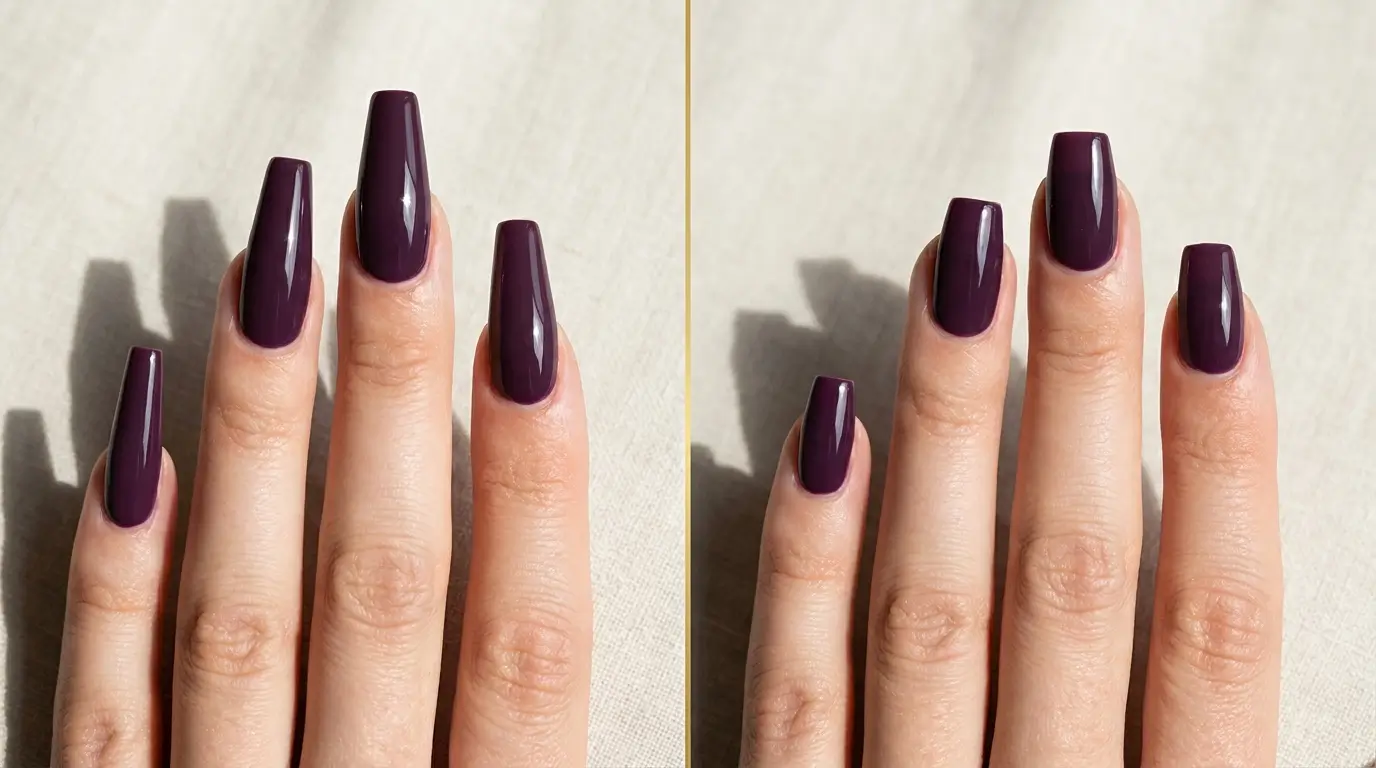
Technicians who fill them describe the trade-off clearly: the set can be backfilled, but the shape degrades each time. A fresh set in a sharp coffin shape flattens a little at every fill and drifts toward a tapered square. After one or two, you’re better off starting again.
Acrylic has no such limit. The same set can be filled for months, which is the real reason some people never switch.
Is Gel-X More Expensive Than Acrylic?
Broadly the same — and where you book matters far more than which system you pick.
A Gel-X set runs from around $40 with an independent technician to about $60 in a salon, and $45 to $60 is widely described as the going rate. Acrylic sits in much the same territory in most US salons.
Above that it gets harder to justify. One storefront salon charged $105 for Gel-X, which other wearers in the same conversation called overpriced. A home kit is around $300 up front. (Prices reported by US wearers, checked September 2026.)
That $40-to-$105 spread is for one system. It is wider than any real gap between Gel-X and acrylic, which is why “which is cheaper” is the wrong question to ask.
What almost nobody factors in is how fast your own nails grow. The price of one set matters far less than how often you need to go back — and that interval is set by your growth rate, not by which product is sitting on top. Fast-growing nails make either system expensive.
Is Gel-X or Acrylic Stronger?
Acrylic is the harder material. At dramatic lengths that matters, because a long nail works like a lever and the rigid product resists it better. Gel-X has more give — enough that it can flex noticeably in hot water, which some people like and others find unnerving.
But harder is not the same as stays-on-longer, and this is where people get caught out. The two systems fail differently. Acrylic resists breaking and then lifts or pops off when the nail underneath flexes more than it does. Gel-X bends with the nail instead of fighting it, so it is likelier to stay put and likelier to bend out of shape.
Which means the stronger material is not automatically the stronger set on your hands. On a firm nail, acrylic is tougher. On a nail that flexes, the tougher material is the one that comes off.
Neither is unbreakable. The failure technicians hear about most is catching a nail on a fitted sheet while making a bed, and the standing advice is simple enough to repeat: treat them as jewels, not tools.
Which Is Better for Your Nail Shape?
This is the part most comparisons leave out, and it decides the answer more often than any feature does. If you’re choosing a shape for the finished nails rather than working out what your natural nails can hold, see our guide to picking a nail shape.
Flat nail beds
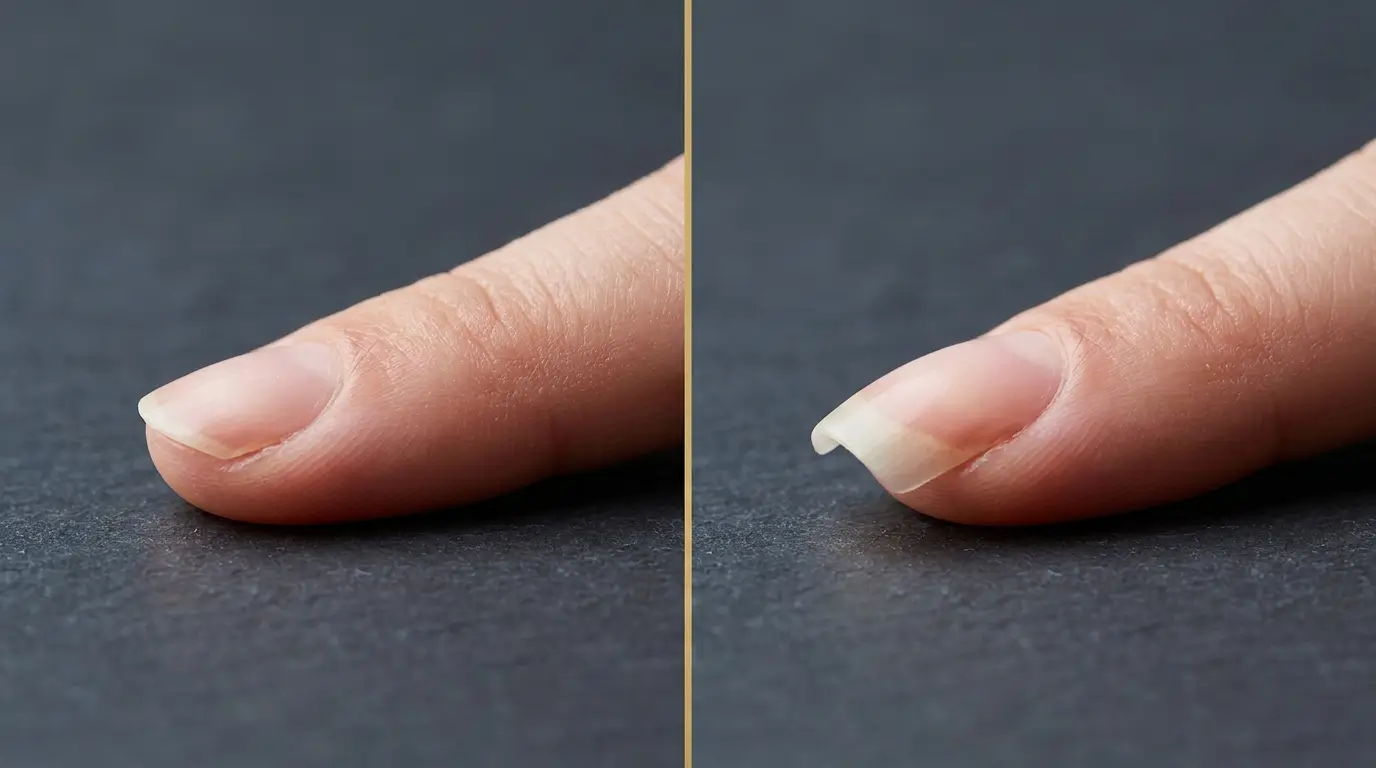
Pre-formed tips are curved. A flat nail gives them less to grip, and tips lift early on flat beds no matter how careful the prep — a pattern technicians see constantly. Hand-sculpted acrylic can be built to match the nail it’s sitting on, so it usually holds better here.
Weak, thin or flexible nails
This is where the pattern reverses. A thin nail bends as you use your hands; rigid acrylic does not, and the mismatch works the product loose. The same arc comes up repeatedly from people with flexible nails — acrylic never lasting, then Gel-X holding for weeks, because the gel moves with the nail instead of fighting it.
Wide or strongly curved nails
Gel-X comes in fixed sizes. Gaps at the sidewalls, where no tip in the box quite fits, are a common complaint from wearers with wider or unusually shaped nails, and the tips can fall short on curve across the nail too. Acrylic has no sizing limit, which is why techs often steer these nails toward it.
Is Gel-X Healthier Than Acrylic?
Less damaging by reputation, but the reputation does most of the work. The most repeated point among working technicians is that the material matters far less than the preparation — over-filing the natural nail before application causes more damage than either product does sitting on top of it.
Allergies are a real difference. Acrylic monomer is a known sensitiser, and people do react to it — including some who wore acrylic for years before developing a reaction, and who then tolerate Gel-X without trouble.
That is not a guarantee. Both systems are acrylate chemistries and reactions to gel products happen too. If you have reacted before, the American Academy of Dermatology publishes guidance on acrylate sensitivity.
If your nails are damaged now, neither system will fix them. Both sit on top of the problem.
Removal: Which Is Easier to Take Off?
Both soak off, and neither should be picked off. Gel-X generally comes away faster because there’s less product to break through; acrylic usually needs more filing first, and a longer soak.
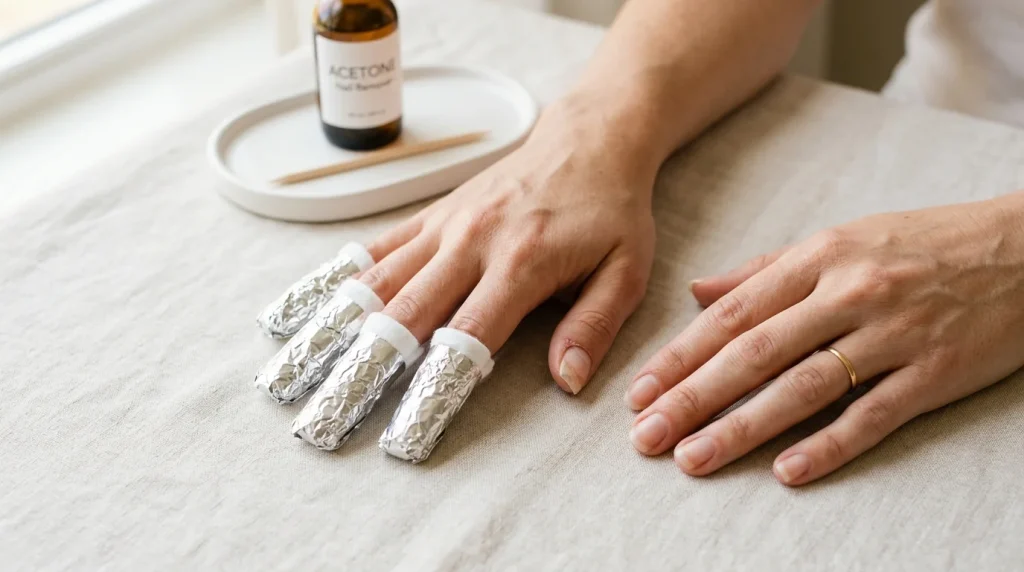
The genuine risk with either is impatience. Prising a set off takes layers of your natural nail with it, and that’s the damage people blame on the product afterwards. We cover removing acrylic at home step by step, including gentler methods that skip acetone.
Gel-X vs Acrylic vs Hard Gel vs Gel Polish
These four get used interchangeably in conversation and they behave nothing alike. The row that catches people out is hard gel, which cannot be soaked off at all.
| System | Wear time | Removal | Can it be filled? |
|---|---|---|---|
| Gel-X | 3–6 weeks | Soaks off | Once or twice |
| Acrylic | 3–6 weeks | Soaks off | Yes, indefinitely |
| Hard gel | 3–6 weeks | Must be filed off | Yes |
| Gel polish | 14–21 days | Soaks off | No, reapplied |
Hard gel is not the same thing as builder gel or BIAB, which are softer systems used mostly to strengthen or slightly extend the natural nail — we cover builder gel and BIAB separately.
Which Should You Choose?
Go with Gel-X if your natural nails are thin or flexible, you want a lighter feel and a natural finish, you’re new to extensions, or acrylic has given you trouble before.
Go with acrylic if you want serious length, your nail beds are flat or wide, you work hard with your hands, or you’d rather fill one set for months than replace it.
And if you’re still unsure, ask the technician to look at your nails before you book. A tech who has seen your nail beds will give you a better answer than any comparison can, including this one.
Frequently Asked Questions
What are the disadvantages of Gel-X nails?
Four, mainly. The tips come in fixed sizes, so wide or unusually shaped nails can end up with gaps at the sidewalls. Flat nail beds give a curved tip less to grip, which means earlier lifting. The set takes one or two fills before the shape flattens and it is better to start over. And the material has enough flex to move noticeably in hot water.
None of these rule it out. They just explain why a technician might look at your nails and suggest acrylic instead.
Are Gel-X healthier than acrylics?
Gel-X has the gentler reputation, mostly because it usually needs less filing of the natural nail and comes off with a shorter soak. That is a genuine advantage, but it is smaller than people assume. The preparation and the removal cause far more damage than either product does sitting on the nail.
The clearer difference is allergies. Acrylic monomer is a known sensitiser, and some people who wore acrylic for years before reacting to it go on to wear Gel-X without trouble.
What’s healthier for nails, gel or acrylic?
Whichever one is applied and removed properly. A careful acrylic set does less damage than a gel set that was over-filed going on and picked off coming off. If you want the shortest answer: the technician matters more than the product.
What lasts longer, gel or acrylic nails?
Both need a first fill at around two to three weeks, and both hold three to six weeks before the set has to be redone. Acrylic wins on the long run rather than the single set, because it can be filled on indefinitely while Gel-X gets one or two fills before replacement.
On flexible or thin natural nails the picture often flips, and Gel-X outlasts acrylic by weeks.
Products and prices here are researched from manufacturer, retailer and reported US salon information, not independently tested. Prices checked September 2026.