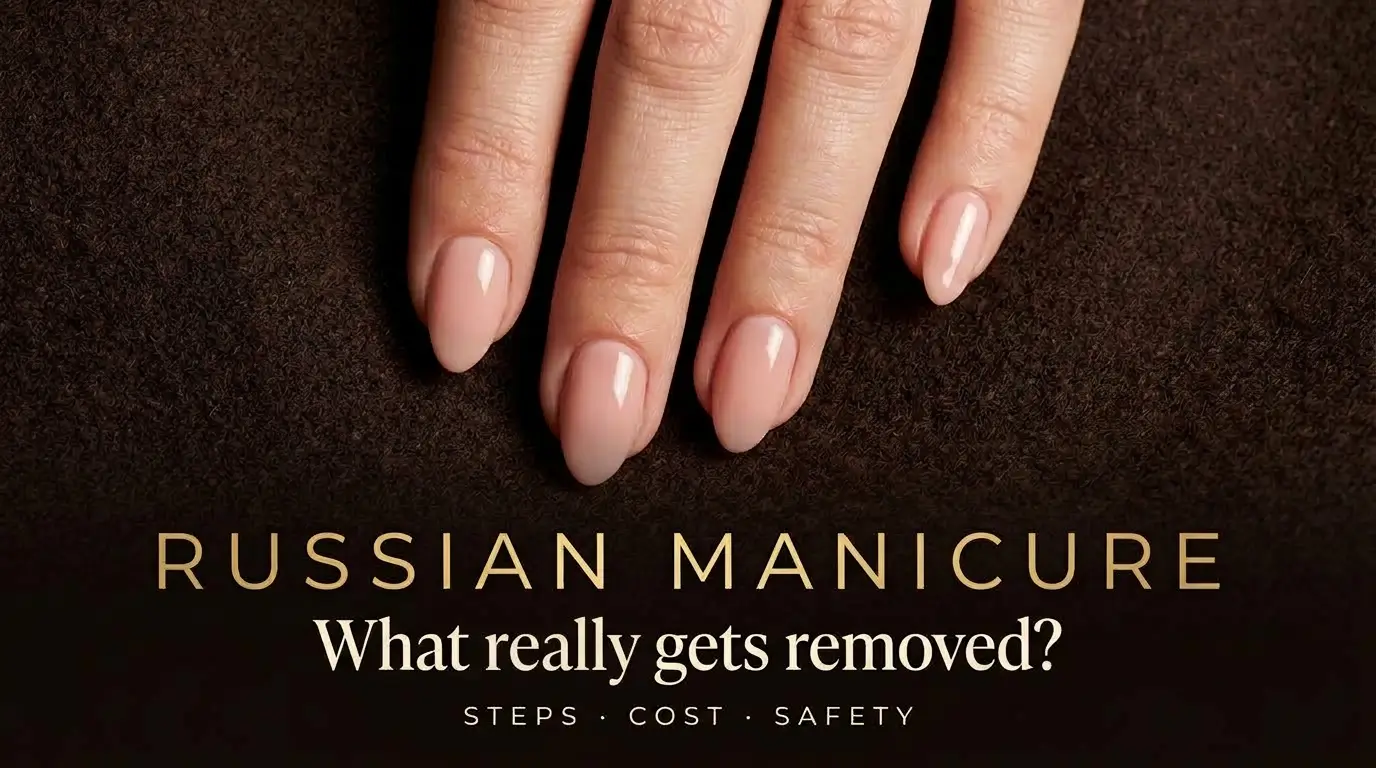
Russian Manicure: What It Is, Steps, Cost & Safety (2026)

A Russian manicure is the reason for those nails online that look almost too clean to be real: colour sitting right against the skin, no gap, no ragged edge. It takes longer and costs more than a regular manicure. Here’s what actually happens in the chair, what gets removed, and when it’s worth skipping.
The quick answer: a Russian manicure is a dry manicure done with an electric file (e-file) instead of soaking. The tech cleans dead tissue off the nail and around the cuticle line, then applies gel very close to the skin, usually over a builder gel base. Most salons quote three to four weeks of wear. It’s only as safe as the tech doing it, and the risk comes from cutting living skin, not from the e-file itself.
What this guide covers
- What Is a Russian Manicure?
- How Is It Different From a Regular Manicure?
- How a Russian Manicure Is Done, Step by Step
- Cuticle vs Living Skin: What Actually Gets Removed?
- Is a Russian Manicure Safe?
- How Much Does a Russian Manicure Cost?
- How Long Does a Russian Manicure Last?
- Real Russian Manicure or Just an E-File Manicure?
- Frequently Asked Questions
What Is a Russian Manicure?
A Russian manicure is a precise, dry nail prep technique. Instead of soaking your hands and pushing the cuticles back, the tech uses an e-file with fine bits to lift and clear dead tissue from the nail plate and the edges around it.
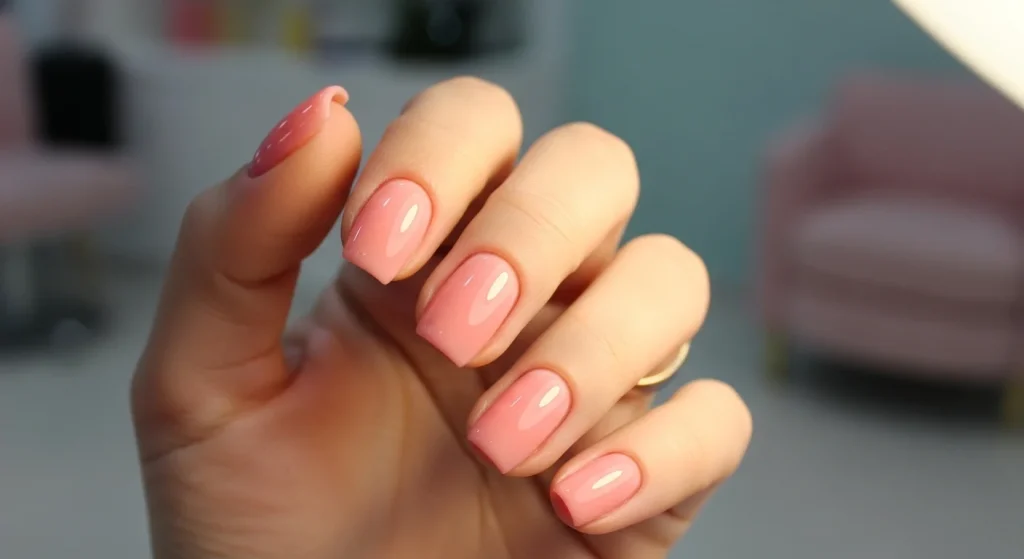
That clean base lets the gel go on right up to the skin. As your nail grows, there’s no obvious strip of bare nail at the base, so the manicure looks fresh for longer.
The same technique is used on toes, where it’s called a Russian pedicure.
Why is it called a Russian manicure?
The method was developed by nail technicians in Russia and spread across Eastern Europe, where it’s now a standard way of working. It only reached salons in the US in the last few years, mostly through social media.
Other names: dry, e-file and combi manicure
You’ll see the same service listed as a dry manicure, an e-file manicure or a combi (combination) manicure. “Combi” means the tech uses both an e-file and hand tools like cuticle scissors. Not every salon means exactly the same thing by these names, which is why the checklist further down is worth reading before you book.
How Is It Different From a Regular Manicure?
The two big differences are water and cuticle work. A regular manicure softens the skin in water, then pushes back and lightly trims. A Russian manicure skips the soak and does far more detailed work around the nail.
| Russian manicure | Regular manicure | |
|---|---|---|
| Soaking | None, done dry | Hands soaked first |
| Cuticle work | E-file bits, then scissors or nippers | Pushed back, light trim |
| Finish | Colour very close to the skin | Small gap at the cuticle |
| Usual product | Builder gel plus gel colour | Polish or gel polish |
| Appointment | About 1 to 2.5 hours | Shorter |
| Skill needed | Advanced | Basic to moderate |
If you’re used to a quick soak-and-push service, the classic at-home manicure steps show what a regular manicure covers.
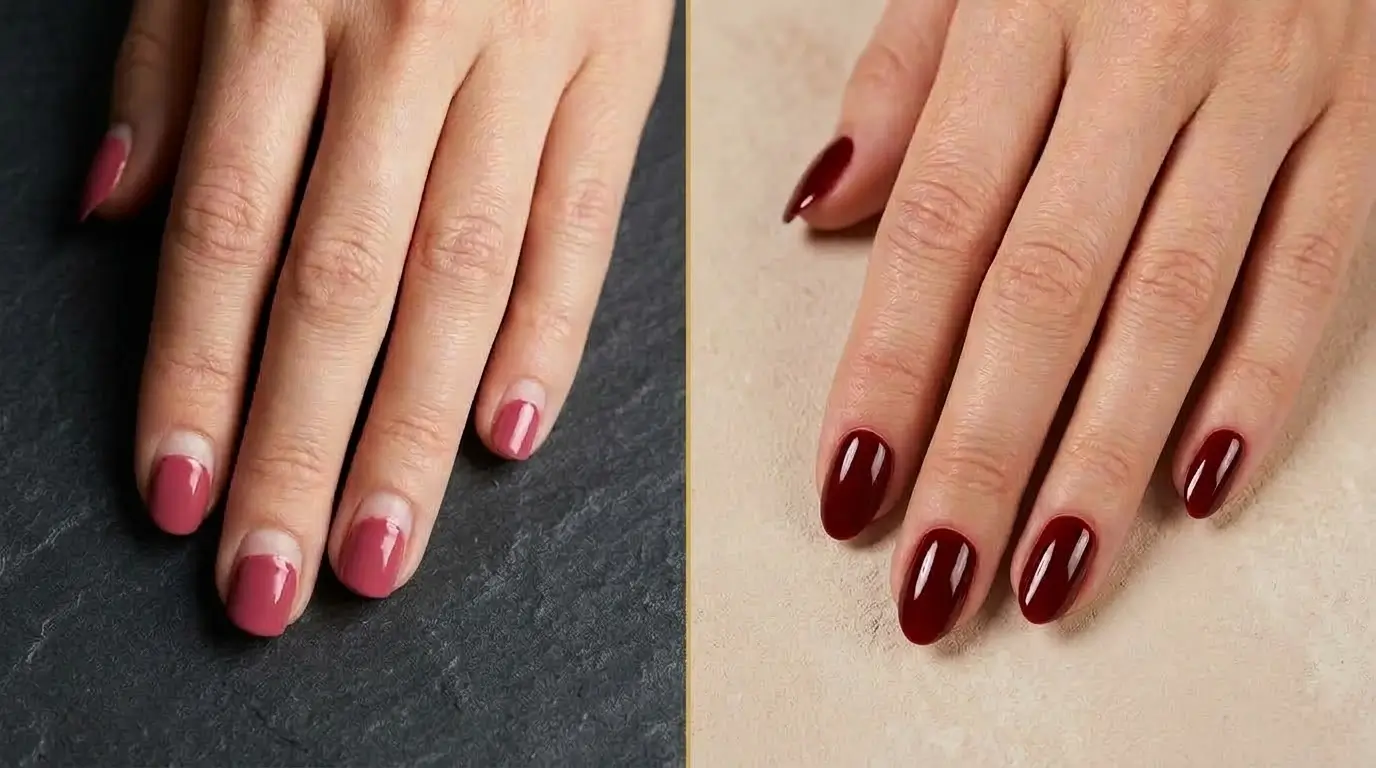
Russian vs gel manicure
These aren’t really alternatives. “Russian” describes the prep and cuticle work. “Gel” describes the product that goes on top. Most Russian manicures finish with gel, so you’re usually getting both.
Russian vs Japanese manicure
A Japanese manicure goes the other way: no polish, no drill. It’s built around nourishing and buffing the natural nail for a soft shine. Choose Russian if you want long-lasting colour with a crisp edge, and Japanese if you want bare, healthy-looking nails with no product on them.
How a Russian Manicure Is Done, Step by Step
Salons vary in the details, but the sequence is broadly the same.
- Dry prep. Old product is filed off with the e-file, not soaked in acetone.
- E-file cuticle work. Fine bits lift dead tissue off the nail plate and clean along the edges. A flame-shaped bit is the classic tool.
- Trimming. Lifted dead tissue and hangnails are trimmed with sharp cuticle scissors or nippers.
- Shaping. The free edge is filed into your chosen shape.
- Structure. A thin layer of structured builder gel is applied and shaped, tucked as close to the skin as possible.
- Colour. Gel colour goes on top and is cured under an LED lamp.
- Oil. Cuticle oil finishes the service.
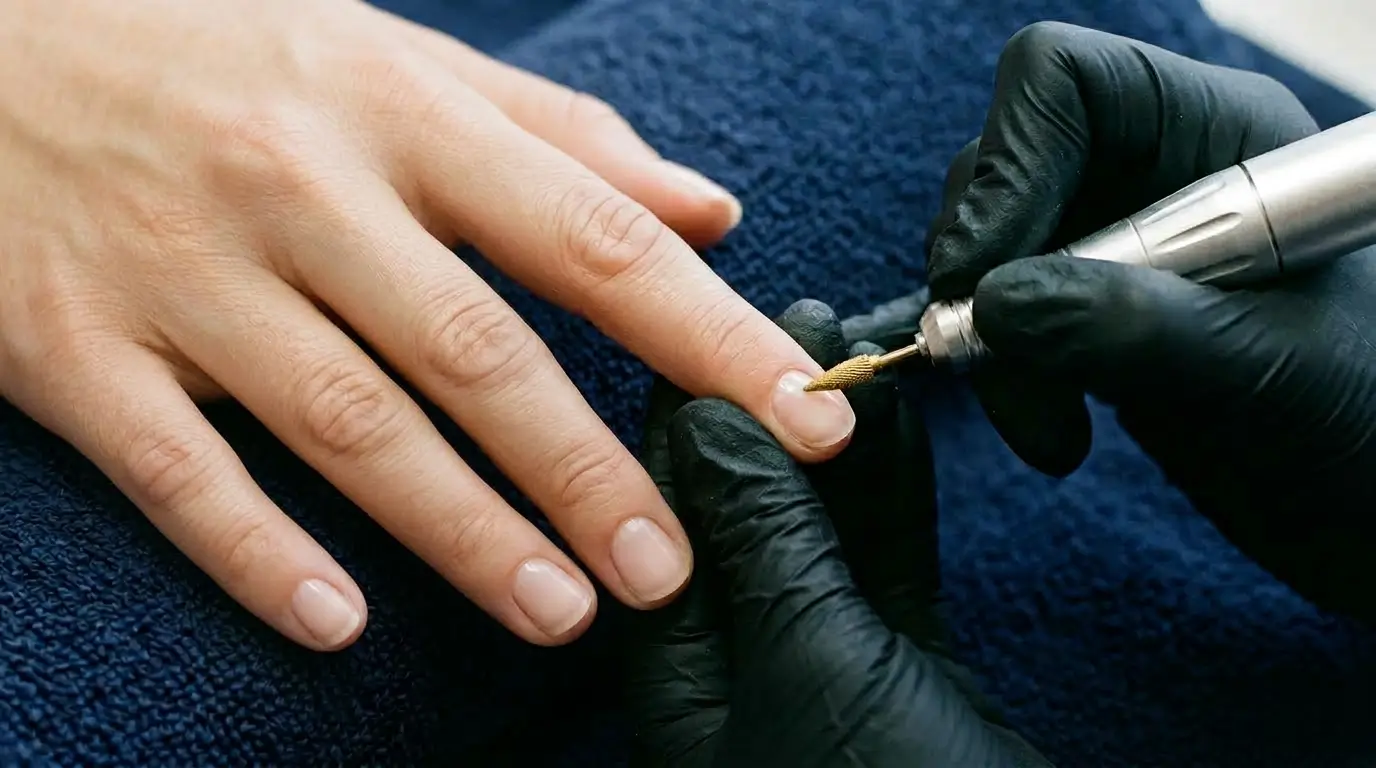
Because the base is built up rather than soaked off, refills usually mean filing down most of the old gel and adding a fresh layer, not starting from bare nails. If you’re curious about the drill itself, see our guide to electric nail files. You can also add extensions: some salons pair the prep with Gel-X soft gel tips.
Cuticle vs Living Skin: What Actually Gets Removed?
This is where most of the confusion (and most of the controversy) comes from. People say “cuticle” for everything around the base of the nail. It’s actually three different things.
- The cuticle is a thin layer of dead, see-through tissue stuck to the nail plate. It’s dead, so removing it doesn’t hurt.
- The eponychium is the living skin at the base of the nail that the cuticle grows from. It seals the gap between skin and nail.
- The proximal nail fold is the fold of living skin that covers the base of the nail and the area where it grows.
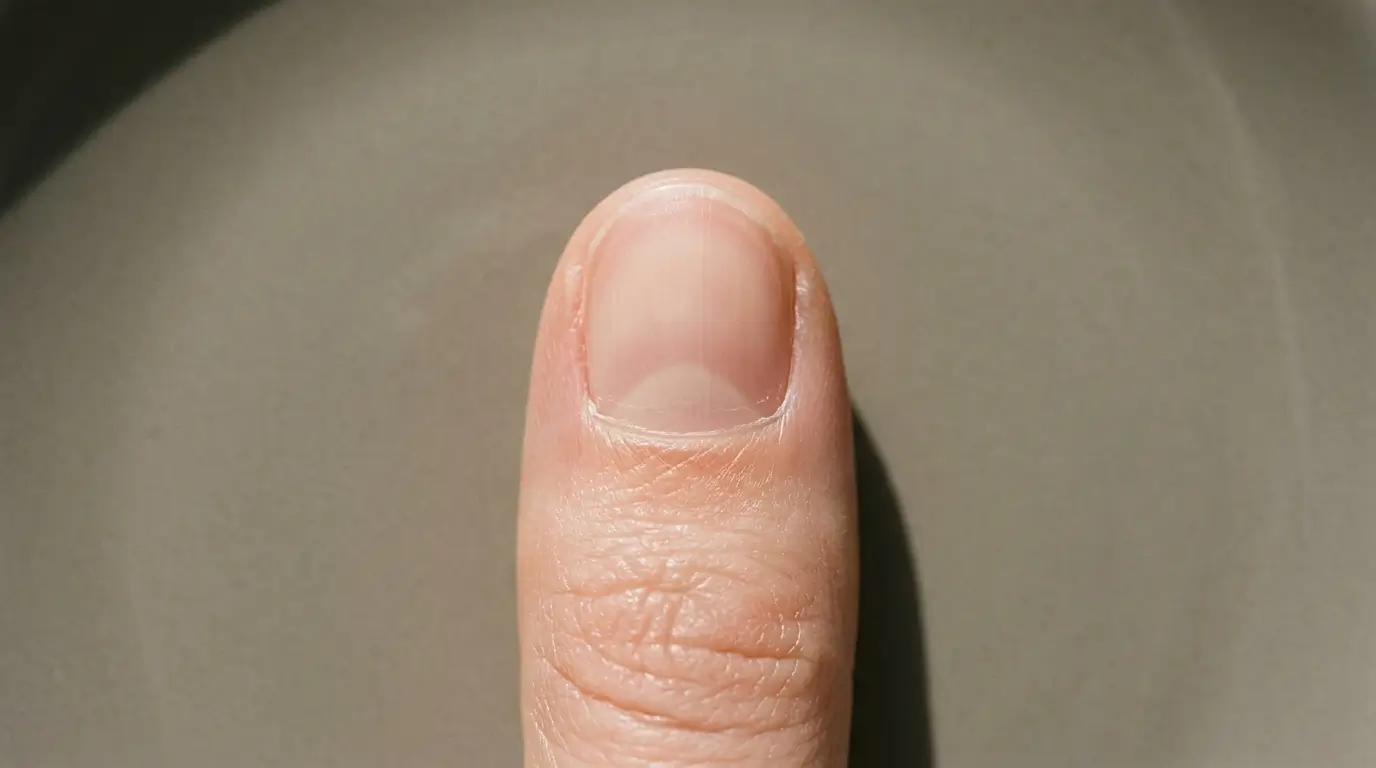
Clearing the dead cuticle is what every good manicure does. The problem starts when the living skin gets cut. Salons disagree on this: some say only dead tissue is ever trimmed, while others treat trimming into the eponychium as part of the technique.
Cutting living skin tends to backfire. Nail tech Paola Ponce, who trained in the method, points out that breaking the skin makes it grow back thicker, so you need more trimming next time, not less.
That’s the same reason our cuticle care habits guide warns against over-trimming. The dead layer can go. The living seal should stay.
Is a Russian Manicure Safe?
It can be, in trained hands with sterilised tools. The technique isn’t dangerous by itself. The risks come from how deep the work goes and how clean the tools are.
The risks
- Cuts and abrasions from an e-file or scissors used too close to living skin.
- Infection, if the skin is broken or tools aren’t properly sterilised.
- Thinned nails from over-filing the nail plate, especially when gel is removed too aggressively.
- Soreness or sensitivity around the nail after over-exfoliation.
Dermatologist Dr. Unnati Desai told Refinery29 that removing the eponychium creates a real risk of infection, and that on darker skin tones the injury can leave hyperpigmentation around the nail.
What the medical research says
There’s very little research on Russian manicures. The one published report is a 2022 case study in Skin Appendage Disorders, describing a 20-year-old who developed a painful infection around one nail after the service, and later lost that nail temporarily. The doctors expected it to grow back.
It’s a single case, so it shows the risk is real, not that every Russian manicure causes harm. The authors’ point was about the cuticle itself: it acts as a barrier against infection, and they knew of no data showing an e-file is gentler than nippers.
What reduces the risk: a tech trained specifically in e-file work, tools that come out of a sealed sterilisation pouch, and a clear answer when you ask whether they cut living skin.
Who should skip it
- Anyone with very sensitive skin, a skin condition on the hands, or a nail infection.
- People taking medication that thins the skin or slows healing.
- Children and young teens.
If any of these apply, check with a doctor before booking.
How Much Does a Russian Manicure Cost?
Salons we checked list roughly $50 to $115 in the US, with New York prices higher. Here’s what each one publishes:
| Salon (location) | Listed price | Quoted wear |
|---|---|---|
| Body. Skin. Nails. (US) | $60–70 without gel; $80–115 with builder gel | 3–4 weeks |
| The Paintbox Studio (US) | From $80 | Up to 7–8 weeks; rebook by 4 |
| Allure Day Spa (New York) | $50–100; up to $150 in NYC | 2–4 weeks |
| NYC salon quoted by Refinery29 | From about $100 | About 4 weeks |
| Frida Beauty Collective (Fort Worth, 2023 prices) | $50–70 without polish; $70–90 with gel | Up to 4 weeks |
Prices are each salon’s own published figures, checked September 2026.
Why it costs more: the tech needs specialist training, sterilisation equipment adds cost, and appointments run about 1 to 2.5 hours. Because it lasts longer, some clients find they book fewer appointments overall.
How Long Does a Russian Manicure Last?
Most salons quote three to four weeks. The range you’ll see online runs from two weeks to eight, and the difference usually comes down to what goes on top. Gel over a builder base lasts longest. Plain polish won’t last as long.
Even when the colour still looks good, many techs recommend rebooking around four weeks. As the nail grows, the thickest point of the gel moves toward the tip, which makes the nail top-heavy and more likely to break at the sides.
Real Russian Manicure or Just an E-File Manicure?
Lots of salons now list a “Russian manicure” because it’s popular. Using an e-file doesn’t make it one. Signs you’re getting the full technique:
- Sterilised tools, opened from a sealed pouch in front of you, not just wiped with disinfectant.
- No soaking at any point.
- Detailed cuticle work with fine e-file bits plus scissors or nippers.
- A builder gel base, with colour placed right up to the skin.
- A long appointment. If it’s done in 30 minutes, it probably isn’t a Russian manicure.
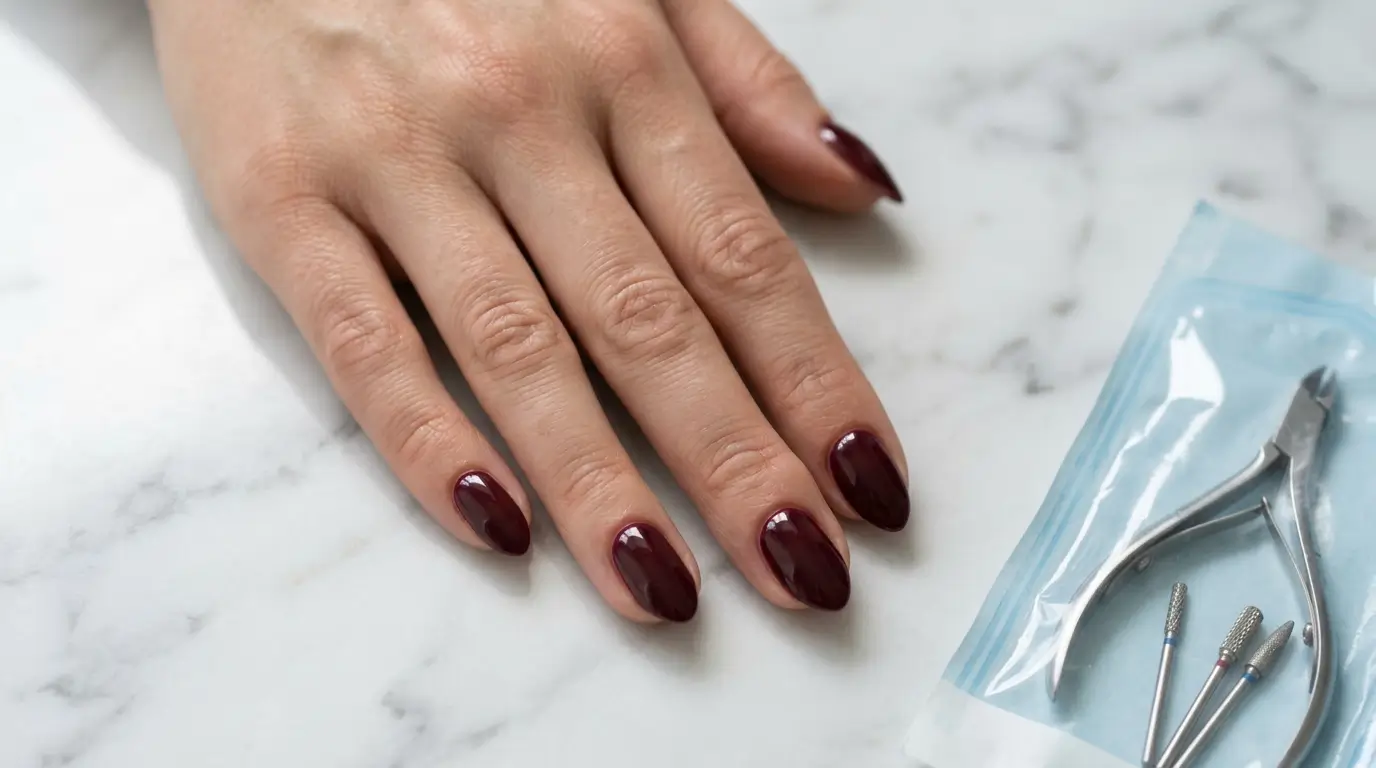
It’s also fair to ask how the tech was trained and how long they’ve been doing e-file work. A good one won’t mind the question.
Frequently Asked Questions
Does a Russian manicure hurt?
It shouldn’t. Salons describe it as gentle when only dead tissue is touched. Stinging or bleeding usually means the work has gone into living skin, so tell the tech to stop.
Why is a Russian manicure so expensive?
Training, sterilisation equipment and time. Appointments often take one to two and a half hours. See the price table above.
What is the healthiest manicure for your nails?
The gentlest option is one that leaves living skin alone and doesn’t over-file the nail plate. That favours simpler services, like a bare Japanese-style manicure, for anyone whose nails are already weak. A Russian manicure can suit healthy nails if the tech keeps to dead tissue and removes gel gently.
Can I give myself a Russian manicure?
Not the full version. The cuticle work needs training and a steady hand with the e-file. You can get a cleaner look at home by gently pushing back cuticles on dry nails and finishing with oil. Never file or cut living skin yourself.
Can you get a Russian manicure with builder gel?
Yes. It’s the most common way to get one. The builder gel gives the nail structure and is what lets the colour sit so close to the skin.
Is a Russian manicure good for your nails?
It can help with ragged cuticles and hangnails when only dead tissue is removed. It can harm them when living skin is cut or the nail is over-filed. The tech matters more than the technique.
Updated September 2026. Prices and wear times are taken from salons’ own published pages and are not independently tested.