How to Remove Acrylic Nails at Home Safely (Expert Guide for Beginners)

Thinking of pulling your acrylic nails off? Stop.
That’s the fastest way to damage your natural nails—often causing peeling, thinning, and long-term weakness.
The good news? You can safely remove acrylic nails at home—if you follow the right method used by professionals. This guide walks you through it step-by-step, with expert-backed tips to protect your nail health.
“Don’t worry—if you follow the steps below, you can remove them without damaging your natural nails.”
Quick Answer: How to Remove Acrylic Nails at Home
- Trim the acrylic length
- File off the shiny top layer
- Soak cotton in 100% pure acetone
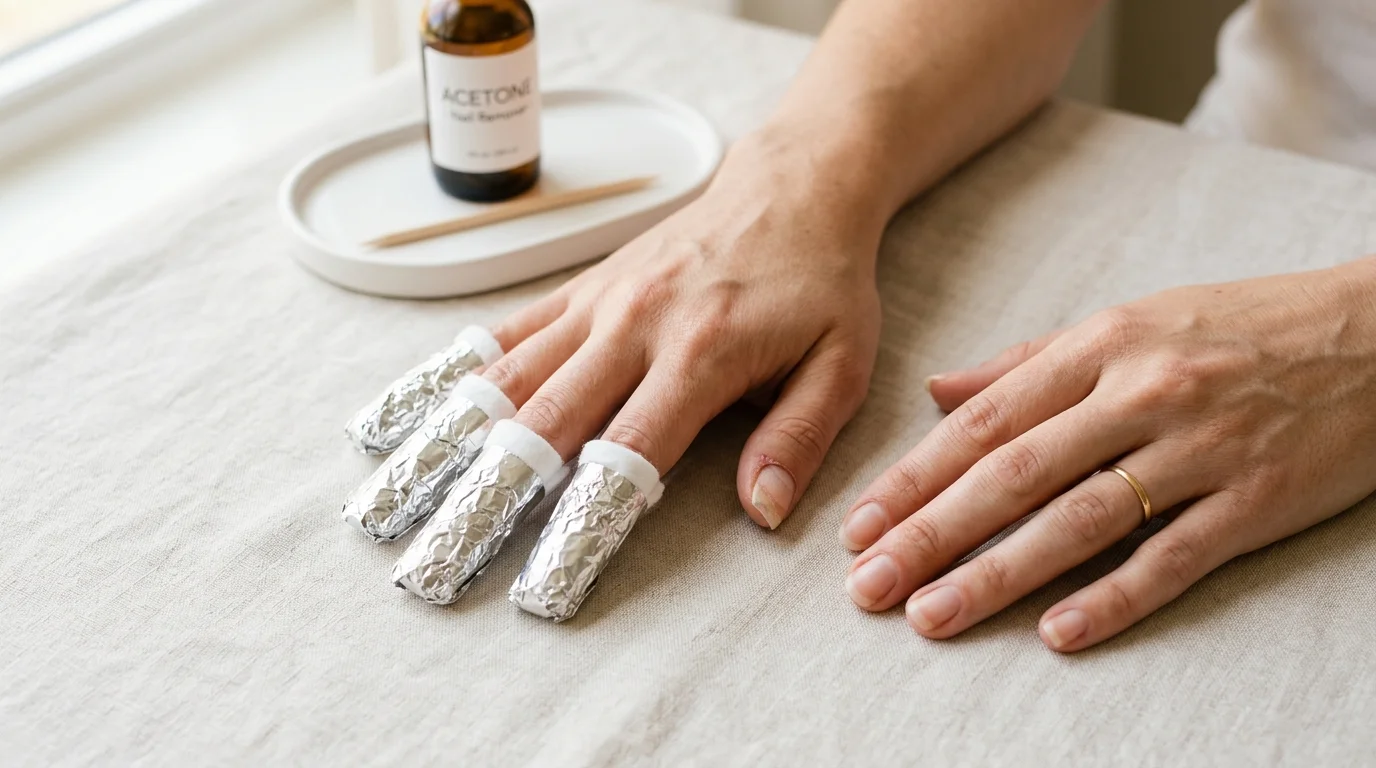
- Wrap nails with foil
- Wait 20–30 minutes
- Gently push off softened acrylic
- Moisturize and repair your nails
The Best Way to Remove Acrylic Nails at Home
The foil wrap method is the safest and most effective way to remove acrylic nails at home.
- ✔ Controlled acetone exposure
- ✔ Less damage to skin
- ✔ Recommended by nail professionals
Other methods exist—but most are either less effective or more damaging (we’ll cover those later).
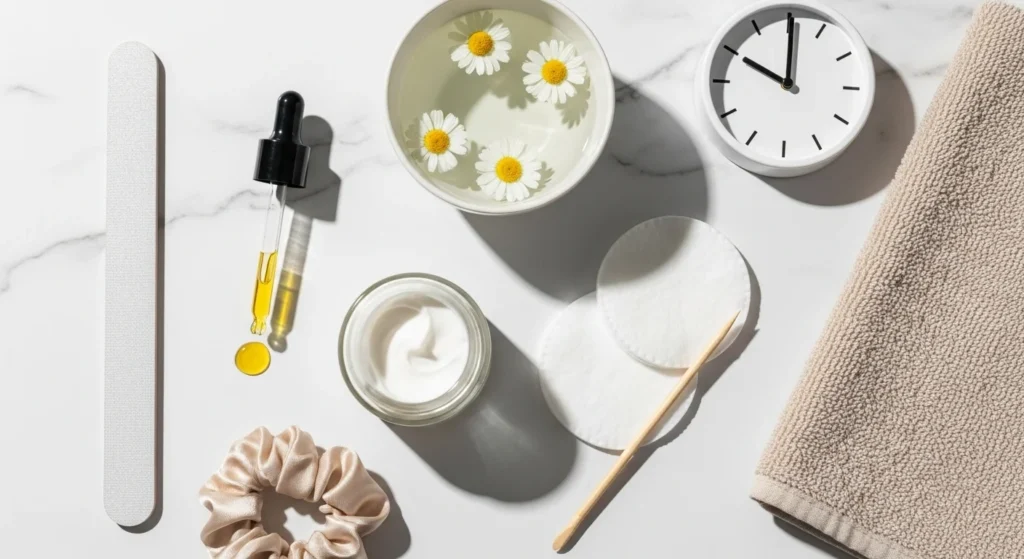
What You Need Before You Start
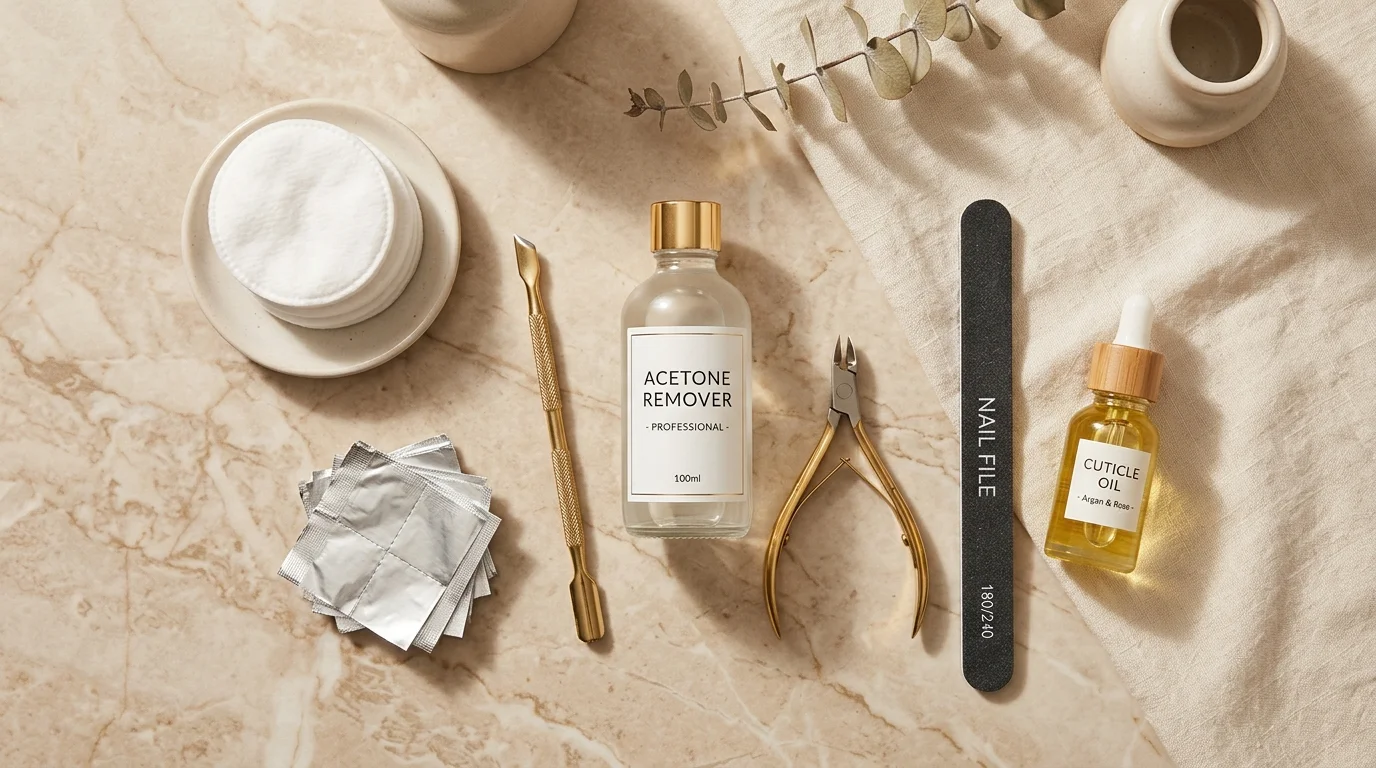
- 100% pure acetone (non-negotiable)
- Cotton balls or pads
- Aluminum foil
- Nail clipper
- 100/180 grit nail file
- Orangewood stick or cuticle pusher
- Petroleum jelly (to protect skin)
- Cuticle oil or hand cream
👉 Pro Tip: Regular nail polish remover won’t work—it’s too diluted to break down acrylic.
Step-by-Step: How to Remove Acrylic Nails Safely
Step 1 — Trim the Length
Clip your acrylic nails as short as possible.
✔ This reduces bulk
✔ Speeds up removal
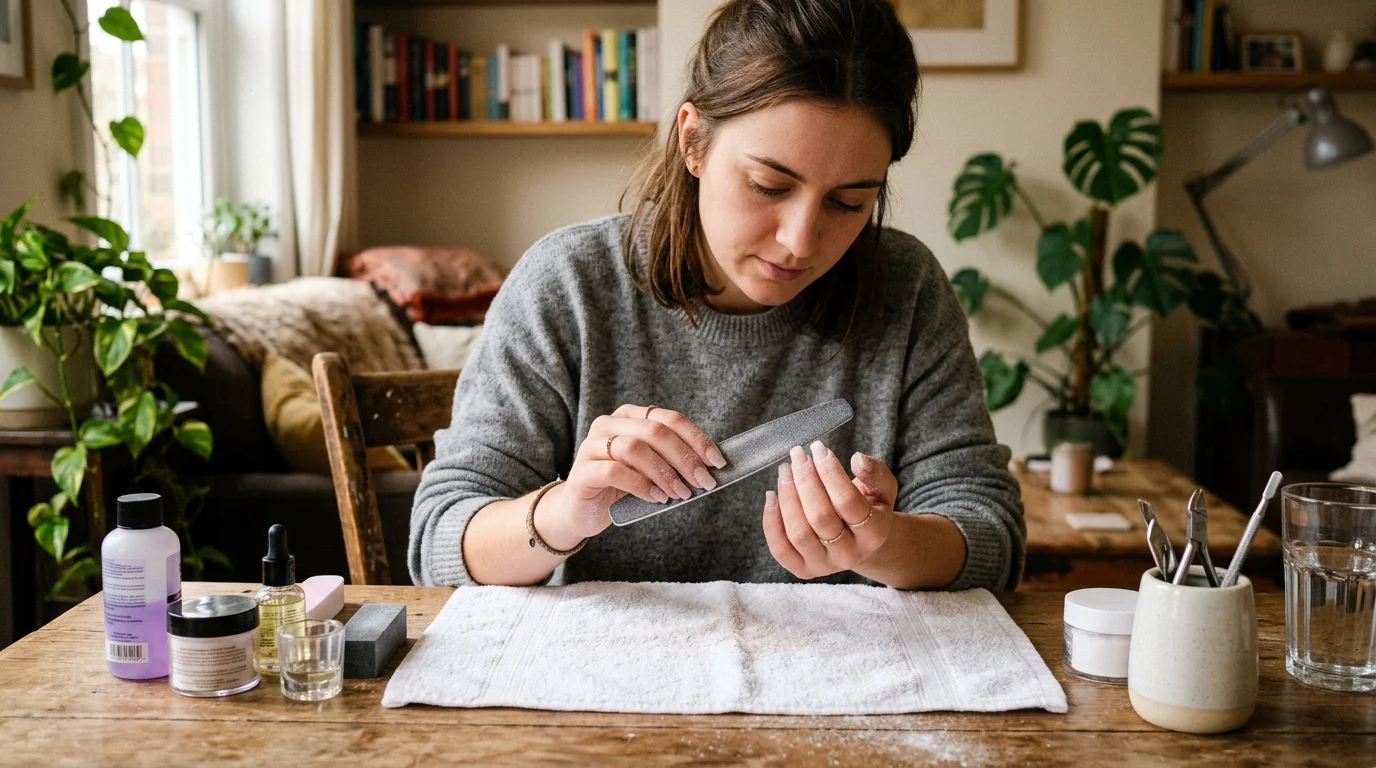
Step 2 — File Off the Topcoat (CRITICAL STEP)
File away the shiny top layer completely and thin the acrylic slightly.
Nail Tech Secret:
If you skip this step, acetone can’t properly penetrate the acrylic. This is the #1 reason at-home removal fails.
Don’t worry about getting it perfect—just remove the shine.
Step 3 — Protect Your Skin
Apply petroleum jelly around your nails and cuticles.
✔ Prevents dryness
✔ Protects skin from acetone irritation
Step 4 — Soak with Acetone + Foil Wrap
- Soak cotton in 100% acetone
- Place it directly on your nail
- Wrap each finger tightly with foil
Now let it sit for 20–30 minutes.
👉 This is normal—use this time to relax.
Nail Tech Secret:
Warm hands help acetone work faster. Wrapping your fingers tightly traps heat and speeds up the breakdown of acrylic.

Step 5 — Gently Push Off the Acrylic
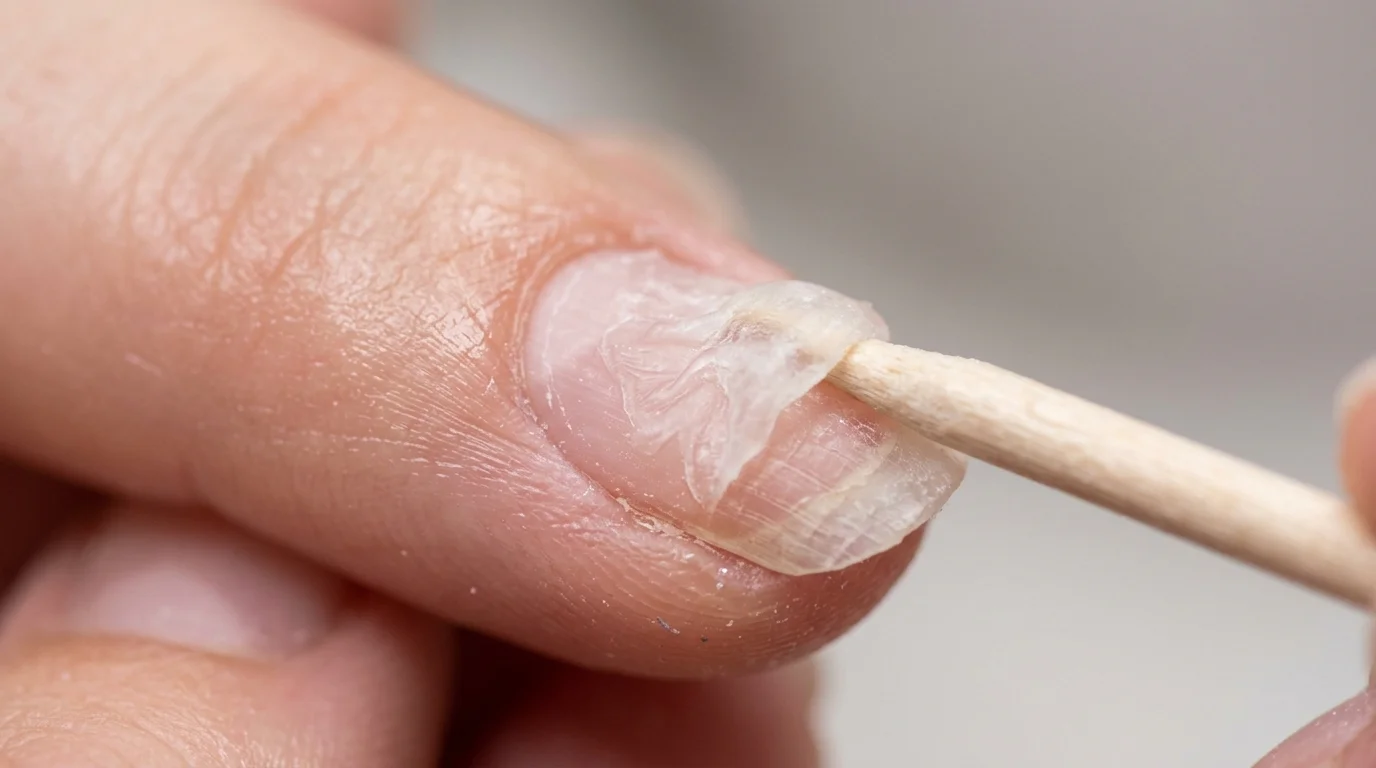
Remove the foil and check your nails.
The acrylic should feel:
- Soft
- Gummy
- Easy to remove
- It may look wrinkled or lifted—that’s normal.
Use an orangewood stick to gently push it off.
⚠️ If it feels hard—STOP.
Re-wrap and soak longer. Forcing it will damage your natural nail.
Step 6 — Buff Gently
Lightly buff off any remaining residue.
✔ Be gentle
✔ Avoid over-filing your natural nail
Step 7 — Rehydrate & Repair
Wash your hands thoroughly, then apply:
- Cuticle oil
- Thick hand cream
👉 Your nails may feel dry—this is normal.
Why Acrylic Nails Are Hard to Remove
Acrylic nails are made from a hardened plastic-like layer that bonds tightly to your natural nail. They form a strong, sealed layer over your natural nail, which is why simple soaking in water doesn’t work.
- Water doesn’t dissolve it
- Gentle removers don’t work
- Only acetone can break it down effectively
That’s why soaking—not peeling—is essential.
Why Your Acrylic Nails Aren’t Coming Off
If you’re struggling, it’s usually because:
- You didn’t file enough
- You used diluted remover
- You didn’t soak long enough
- The acrylic layer is too thick
- You didn’t wrap the foil tightly enough
👉 Fix: Re-soak and be patient—this is key to avoiding damage.
Best Methods to Remove Acrylic Nails (Compared)
1. Foil Wrap Method (Best Choice)
✔ Safe
✔ Effective
✔ Minimal damage
2. Warm Acetone Bowl (Faster but Harsher)
✔ Works faster
❌ Dries out skin more
3. Soapy Water Method (Limited Effectiveness)
Warm water alone usually won’t dissolve acrylic completely, but gentler acetone-free methods can help soften lifting points gradually when done patiently.
👉 If you prefer a gentler alternative with less dryness, read our guide on how to remove acrylic nails without acetone.
Popular Acrylic Nail Removal Hacks (Do They Actually Work?)
Let’s clear this up:
- Dental floss ❌ → Can rip layers of your natural nail
- Baking soda + lemon ❌ → Ineffective and irritating
- Warm water ⚠️ → Only loosens glue—not acrylic
👉 These methods are risky and unreliable.
Biggest Mistakes That Damage Your Nails
Avoid these at all costs:
- ❌ Peeling or ripping acrylic off
- ❌ Skipping the filing step
- ❌ Not soaking long enough
- ❌ Using metal tools aggressively
- ❌ Using the wrong products
How Long Does It Take?
- Foil method: 20–45 minutes
- Bowl method: 15–30 minutes
- Alternative methods: longer + unreliable
👉 If it’s taking longer than expected, don’t panic—just re-soak instead of forcing removal.
👉 If you’re unsure why timing varies, here’s a full breakdown of How Long Does a Full Set of Acrylic Nails Take , including removal timelines and what affects them.
Aftercare: How to Repair Your Nails

Immediate Care
- Hydrate immediately
- Avoid polish for a few days
Strengthening Your Nails
- Use cuticle oil daily
- Apply nail strengtheners
- Keep nails short while recovering
👉 Nails may feel thin due to dehydration—not permanent damage.
👉 Most nails start to feel stronger again within 5–7 days with proper care.
What to Avoid
- Reapplying acrylic immediately
- Over-buffing
- Harsh chemicals
Safety Warnings You Should Never Ignore
⚠️ Never:
- Heat acetone in a microwave
- Use near open flames
- Work in a closed, unventilated space
👉 Always ensure good airflow while using acetone.
FAQs
Final Thoughts
Removing acrylic nails at home is completely safe when done correctly. The key is patience—rushing the process is what causes damage, not the removal itself.
👉 The key is simple:
- Soften the acrylic fully
- Never force it off
Follow the right method, and your natural nails will stay healthy, strong, and damage-free.